

Most water leaking from an AC comes from one of four problems: a clogged condensate drain, a frozen evaporator coil, a cracked or rusted drain pan, or a dead condensate pump. If water is pooling near outlets, wiring, or your furnace, shut off the thermostat and flip the breaker for the unit right now. Lay down towels, grab a bucket, and snap a few photos before you touch anything else.
TL;DR:
- Most water leaks from an AC are caused by clogged drain lines, frozen evaporator coils, or faulty condensate pumps, requiring targeted checks.
- Regular maintenance such as flushing the drain line with vinegar every three to six months and changing filters every one to three months prevents buildup and leaks.
- Diagnosing leaks involves inspecting the drain pan, coil frost, outdoor drain line, and checking for electrical damage or water pooling near wiring.
- Quick vacuuming of the drain line and replacing dirty filters can often resolve simple leaks, but refrigerant or electrical issues need professional attention.
- Annual HVAC inspections can detect early signs of deterioration, saving costs and preventing water damage from rusted pans or corroded components.
Table of Contents
- Water Leaking from AC: What to Do in the Next 10 Minutes
- What Causes an Air Conditioner to Leak Water?
- How Do You Diagnose Water Leaking from an AC?
- How to Fix an AC Water Leak Yourself
- How Often Should You Change Your AC Filter to Prevent Leaks?
- When Should You Call an HVAC Technician for a Water Leak?
- Can High Indoor Humidity Cause an AC to Leak Water?
- Do Duct Leaks Contribute to AC Water Problems?
- Why Regular HVAC Inspections Catch Leaks Before They Start
- Why Fast Response Beats Waiting Out a Leak
- Get Your AC Leak Fixed Before It Becomes a Bigger Repair
- Sources
Water Leaking from AC: What to Do in the Next 10 Minutes
Before you diagnose anything, stop the damage. A few fast moves now save you from a soaked ceiling, a warped floor, or a shocked breaker later.
- Cut the power. Switch the thermostat to "off" and flip the breaker for the air handler or furnace if water is anywhere near electrical connections.
- Contain the mess. Towels under the leak, a bucket under any active drip, and move rugs, boxes, or electronics out of the splash zone.
- Watch and listen. If the system is still running, note any hissing sounds, visible ice on the copper lines, or a sudden loss of cool air. Those point toward refrigerant trouble, not just a clog.
- Find your access points. Locate the indoor cleanout tee near the air handler and the outdoor PVC pipe where condensate normally drips outside. You will need both for the checks in the next section.
Taking these steps first means whatever caused the leak, you have not made it worse while figuring out what it is.
What Causes an Air Conditioner to Leak Water?
Nearly every case traces back to one of these seven issues. Match your symptoms against this list before you start pulling panels off the unit.
- Clogged condensate drain line. Algae, mold, and biofilm build up inside the PVC pipe over a season or two and block the water's exit path, which is the single most common cause of an AC condensate leak.
- Frozen evaporator coil. Restricted airflow or low refrigerant drops the coil below freezing, and the ice melts into more water than the drain pan can handle.
- Dirty air filter. A clogged filter starves the coil of airflow, which is often the root cause behind the frozen coil above.
- Rusty or cracked drain pan. Older metal pans corrode through, and plastic pans crack with age, letting condensate spill past the drain entirely.
- Disconnected or poorly pitched drain line. If the line was installed without the correct slope, water sits instead of draining, and eventually backs up.
- Failed condensate pump. Units without gravity drainage rely on a small pump; when the float switch or motor fails, water has nowhere to go but out.
- High humidity or an oversized/undersized system. Excess moisture in the air means more condensate than a marginal drain setup can keep up with.
How Do You Diagnose Water Leaking from an AC?
Once the power is off and the area is contained, work through these checks in order. Each one narrows down which of the seven causes above you are actually dealing with.
- Water pooling under the air handler? Pull the access panel and look at the drain pan and the cleanout fitting. Standing water or visible sludge in the pan usually means the drain line downstream is blocked.
- Coils covered in frost or ice? Power the system off completely and let it thaw for a few hours before touching anything. Once it is clear, check the filter and airflow. A dirty filter is the most common reason coils freeze in the first place.
- Outdoor drain line barely dripping or dry? That is often the giveaway for a clog. Go outside, find the PVC stub where condensate normally exits, and check for slow drips or a dry pipe when the system is running.
- Leak continues even with the AC completely off? That points away from condensate and toward something else, like a plumbing line, a roof leak, or a refrigeration issue that needs a technician's eyes.
Pro Tip: Look for a T-shaped fitting with a removable cap near the indoor unit — that's the cleanout, and it's the access point for almost every DIY drain fix. If your system doesn't have one, a technician can add one in minutes during a service visit, which saves you from ever having to cut into the line again.
How to Fix an AC Water Leak Yourself
Most leaks that start at the condensate drain or a dirty filter are fixable with tools you probably already own. Here is the order that actually works, based on what causes the most leaks.
- Vacuum the drain line. Seal a wet/dry vac hose against the outdoor PVC stub with a rag or tape and run it for about 60 seconds. This pulls the algae plug straight out in most cases, according to HomeFixer101's drain-clearing method, and it is worth trying before anything else.
- Flush with vinegar. Pour one cup of distilled white vinegar into the indoor cleanout and let it sit for 30 minutes. Direct Energy recommends this as routine maintenance to dissolve biofilm before it becomes a full clog.
- Replace the filter. If it is gray, matted, or you cannot remember the last time you swapped it, that is your answer. Consumer Reports notes most disposable filters need replacing every one to three months, with thicker specialty filters lasting closer to a year.
- Let frozen coils thaw fully. Leave the system off for several hours. If it refreezes within a day or two of running again, that points to low refrigerant or a duct problem beyond a simple filter swap.
- Check the condensate pump. Confirm it has power, listen for the motor kicking on, and check that the float switch moves freely. A pump that hums but never engages the float usually needs replacing.
Skip anything involving refrigerant lines or the electrical panel. If a fix requires opening a sealed refrigerant loop, stop and call a licensed technician.
How Often Should You Change Your AC Filter to Prevent Leaks?
A consistent filter and drain routine prevents most of the leaks covered above before they start.
- Filters: every one to three months for standard disposable filters; thicker pleated or specialty filters can often go up to a year, per Consumer Reports and The Home Depot's guidance.
- Drain line: flush with vinegar every three to six months, and run the wet/dry vac at the first sign of slow drainage each season.
- Access: if your line was installed without a cleanout tee, ask a technician to add one. It turns a 30-minute repair into a two-minute one.
- Annual tune-up: a spring inspection catches weak refrigerant charge and early pan corrosion before they cause a leak. Encode Corporation's commercial maintenance guidance covers the same cadence for larger systems.
- Early warning: a float switch or standalone water sensor near the pan trips before a slow leak turns into standing water on your floor.
When Should You Call an HVAC Technician for a Water Leak?
Some symptoms are not DIY territory, no matter how handy you are. Watch for these red flags:
- Hissing sounds or recurring ice on the coil or lines, which usually means a refrigerant leak. Federal rules require a certified technician for refrigerant work, since it involves regulated chemicals under EPA oversight, as MRCOOL's troubleshooting guide notes.
- The coil freezes again within a day or two after you have already thawed it and changed the filter.
- Visible electrical damage near the leak, or water that has reached outlets or wiring.
- Structural damage, like a stained ceiling, warped flooring, or water tracking into a wall.
Rough cost ranges to expect: drain cleaning often runs under $150, a drain pan replacement typically falls between $200 and $600 depending on unit access, and a condensate pump swap usually lands between $150 and $400. Refrigerant-related repairs vary widely depending on the leak location and refrigerant type. Before you call, note when the leak started, whether the system still cools properly, and any sounds or ice you noticed. That detail cuts diagnostic time on the service call significantly.
Can High Indoor Humidity Cause an AC to Leak Water?
Yes, and it is one of the most overlooked causes. Your AC does not just cool air, it pulls moisture out of it, and that moisture becomes condensate that has to drain somewhere. In a humid climate or during a stretch of sticky weather, the coil can produce far more water than usual, pushing an already-marginal drain line past its limit.
A system that is oversized for the space makes this worse. It cools the air quickly, shuts off, and never runs long enough to properly dehumidify, which leaves the coil doing short, wet cycles that generate more condensate relative to runtime. An undersized system has the opposite problem: it runs constantly trying to keep up, producing a steady stream of condensate that a partially clogged line simply cannot keep pace with.
If you notice leaks mostly during the most humid weeks of summer, that is a strong clue your drain line is borderline and humidity is pushing it over the edge. Clearing the line helps, but a whole-home dehumidifier or a properly sized system fixes the underlying imbalance rather than just treating the symptom every time the weather turns humid.
Do Duct Leaks Contribute to AC Water Problems?
Leaky ductwork rarely gets blamed for water issues, but it plays a real role. When ducts running through an attic, crawlspace, or unconditioned area leak cold air, they chill the surrounding surfaces below the dew point of the humid air around them. That creates condensation on the duct exterior, insulation, or nearby framing, moisture that can look exactly like a drain or coil leak from inside the house.
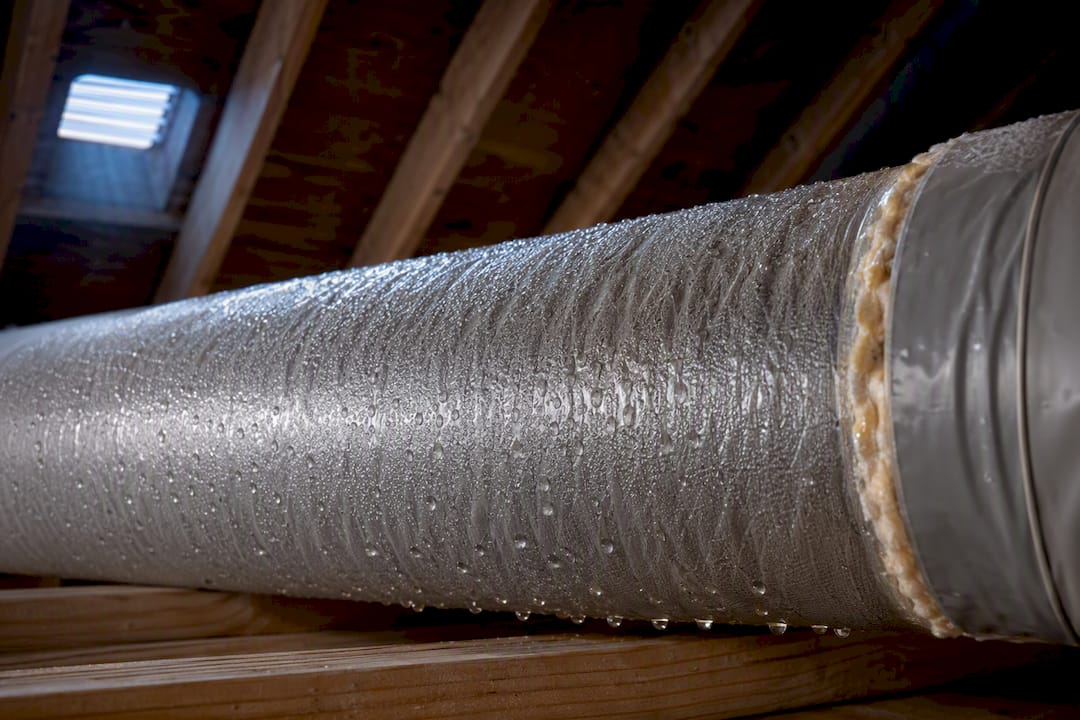
Leaky supply ducts also pull conditioned air away from where it is supposed to go, forcing the system to run longer to hit the thermostat setpoint. Longer run times mean more condensate produced at the coil, which stresses an already marginal drain line.
Check exposed ductwork for visible gaps at the joints, torn insulation, or flex duct that has pulled loose from a connection. Metal foil tape or mastic sealant handles small gaps; larger separations or crushed sections usually call for a professional to reseal. Sealing ducts is not a direct fix for a clogged drain, but it removes one more source of moisture that gets misdiagnosed as an AC leak, and it cuts down on the excess condensate volume your drain system has to handle in the first place.
Why Regular HVAC Inspections Catch Leaks Before They Start
Most of the leaks covered in this guide give warning signs weeks before they become a puddle on your floor. A slightly slower drain, a filter that is a shade dirtier than it should be, a coil running a little colder than normal. None of that is obvious during daily use, but it is exactly what a technician checks during a routine inspection.
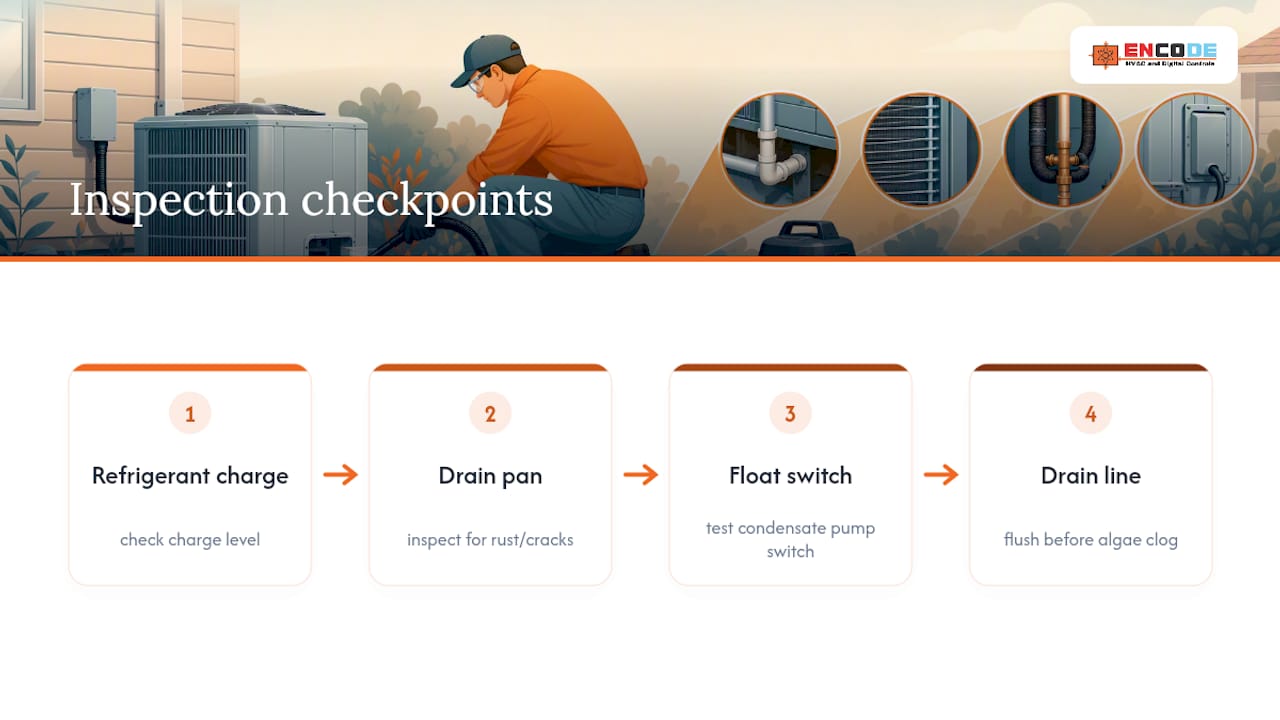
An annual visit typically includes checking refrigerant charge, inspecting the drain pan for early rust or hairline cracks, testing the condensate pump's float switch, and flushing the drain line before algae builds into a full clog. Catching a pan that is starting to corrode means replacing a $200 part instead of dealing with water damage to a subfloor or ceiling below it. Bryant's troubleshooting resources point to the same set of failure points showing up again and again in service calls, most of which were preventable with earlier attention.
If your system is old enough that you cannot remember its last real inspection, that alone is worth scheduling one. Montana's seasonal swings between dry winters and humid summer stretches put extra strain on drain lines and coils, and routine servicing schedules built for that climate exist for a reason.
Why Fast Response Beats Waiting Out a Leak
A leak you catch early costs a filter and thirty minutes with a shop vac. The same leak ignored for a month can mean a warped subfloor, moldy insulation, and a much bigger invoice. That gap between "quick fix" and "expensive repair" is exactly why Fast response and preventative maintenance go hand in hand for this kind of repair, not two separate services. Document what you see, when it started, and what it sounds like. That record turns a guessing game into a five-minute diagnosis for whoever shows up.
— Daniel
Get Your AC Leak Fixed Before It Becomes a Bigger Repair
Local HVAC technicians handle the problems covered in this guide, from a five-minute drain clearing to a full condensate pump swap, for homeowners in the area. A DIY fix buys you time, but a technician catches the underlying cause, whether that is a pan starting to corrode or a duct leak feeding excess humidity into your system.

A typical visit includes:
- Drain line clearing and inspection of the cleanout and outdoor stub
- Condensate pump testing and replacement when the float switch fails
- Drain pan repair or replacement before rust turns into a leak
- Enrollment in a maintenance plan that catches these issues during scheduled visits instead of emergency calls
Every visit ends with a straight answer: what caused the leak, what was fixed, and what to watch for next season, so you are not calling back for the same problem in six months. If your AC is actively leaking or you have already tried the drain-clearing steps above without luck, book a residential HVAC repair visit and get a technician out to look at it directly.
Sources
- How often do you need to change your HVAC air filters? | Consumer Reports
- How to Clean an AC Condensate Drain Line (60-Second Fix With a Wet/Dry Vac) | HomeFixer101
- How to stop AC water leak | Direct Energy
- How often you should change your air filter | The Home Depot