
A noisy AC unit is usually a repair, not a disaster. Buzzing, rattling, and clicking almost always trace back to a worn capacitor, loose panel, or dirty filter. But if you catch a burning smell, see smoke, or hear hissing paired with weak cooling, shut the system off at the breaker right now and call a technician before doing anything else. For everything in between, listening carefully at both the indoor and outdoor units will tell you most of what you need to know.
TL;DR:
- Most noisy AC issues originate from electrical faults, loose hardware, motor or bearing wear, refrigerant leaks, or airflow restrictions, each requiring different urgency levels.
- Typical causes like buzzing or clicking are often repairable through simple fixes such as replacing filters, tightening panels, and checking for debris, but sudden burning smells or smoke demand immediate shutdown and professional help.
- Sounds like screeching or hissing signify serious problems such as failing bearings or refrigerant leaks, which should be addressed by a technician promptly to prevent further damage.
- Listening to when and where the noise occurs helps narrow down potential issues, with normal expansion noises being less urgent than abnormal loud or persistent sounds.
- Routine inspection and early diagnosis, including recording noise patterns, can prevent costly repairs and extend the lifespan of the AC unit.
Table of Contents
- What Causes a Noisy AC Unit in the First Place?
- How Do You Find Where the Noise Is Coming From?
- Simple Fixes You Can Try Before Calling a Technician
- What Does Each AC Sound Actually Mean?
- When Should You Turn Off Your AC and Call a Pro?
- What Happens During a Professional Noise Diagnosis?
- Get Your AC's Noise Diagnosed and Fixed
- The Real Takeaway on Noisy Air Conditioners
- Sources
What Causes a Noisy AC Unit in the First Place?
Most loud air conditioner complaints break down into five root causes, and each one comes with its own urgency level.
- Electrical faults. A failing capacitor or contactor produces a loud buzzing from the outdoor unit, often paired with a fan that won't spin. Treat this as urgent if the fan is dead but the unit is still drawing power. The hum usually stops on its own once the overload protector trips.
- Loose hardware and debris. Rattling or clanking panels, twigs caught in the fan guard, or a loose mounting bolt are among the easiest problems to fix and rarely dangerous.
- Motor and bearing wear. Screeching or grinding points to failing motor bearings or a damaged fan blade. It won't fix itself and tends to get louder fast.
- Refrigerant leaks. A steady hiss or bubbling near the lines or indoor coil signals a refrigerant leak that needs an EPA-certified technician, not a DIY fix.
- Airflow restrictions. A clogged filter or closed vents can create a whistling tone as the system strains to push air through. This one is usually a five-minute maintenance job.
Not every sound is bad news, either. Manufacturers like LG note that some rhythmic ticking or brief start-up noises are normal expansion and contraction, not a fault developing underneath.
How Do You Find Where the Noise Is Coming From?
Before you touch anything, check for the signs that mean stop immediately: a burning smell, visible smoke, repeated loud bangs, or a fan that isn't spinning while the unit still hums. Any of those, kill the power at the breaker and call a technician.
If none of those apply, work through this sequence:
- Stand next to the outdoor condenser first and note exactly what you hear. Buzzing, screeching, hissing, and clicking all sound different up close.
- Move inside and listen at the air handler and at a few supply vents. Duct noise (whistling, rattling metal) sounds different from equipment noise.
- Note when the sound happens: at startup, during steady operation, or right as the unit shuts off. Timing narrows the cause considerably.
- Flip the breaker off, wait five minutes, then restore power and watch the fan spin up and listen for whether the noise returns immediately.
Write down what you heard, where, and when. That detail cuts diagnostic time on a service call significantly.
Pro Tip: Repeated clicking at startup often points to a failing contactor or low control voltage. A technician's transformer should read roughly 24 to 28 volts AC — anything under about 22V is worth mentioning when you call for service.
Simple Fixes You Can Try Before Calling a Technician
A handful of low-risk fixes solve a surprising share of noise complaints without any tools beyond a screwdriver.
- Replace the air filter. A clogged filter restricts airflow and often causes a whistling or straining sound. Check it monthly during peak cooling season and swap it every one to three months depending on your household.
- Clear debris around the outdoor condenser. Leaves, grass clippings, and small branches caught in the fan guard cause rattling. Turn off power first, then remove debris by hand. Don't reach into the fan housing.
- Tighten accessible panels. Loose access panels vibrate against the cabinet and rattle. Snug the screws with a screwdriver, but don't overtighten. Warped sheet metal changes how the panel resonates and can make the noise worse, not better.
- Check the fan blade and unit leveling. Look for a visibly bent or chipped blade, and confirm the outdoor pad hasn't shifted or sunk unevenly into the ground. A tilted unit vibrates more than a level one.
- Inspect window unit seating and hoses. For portable or window units, a loose exhaust hose or a unit that isn't seated flush in the frame causes buzzing that has nothing to do with the compressor.
What Does Each AC Sound Actually Mean?
Matching the sound to the cause is the fastest way to know whether you're looking at a quick fix or a same-day emergency call.
Modern outdoor condensers typically run around 50 to 65 decibels; older or budget units can reach closer to 75 dB. What matters more than the raw volume is a noticeable change from your unit's normal operating sound. If it's suddenly louder than it's ever been, something shifted.
- Buzzing or humming: Usually a capacitor, contactor, or loose wiring issue. Urgent if the fan isn't spinning or cooling has dropped off.
- Screeching or squealing: Motor bearings or a slipping belt. Schedule repair soon, and stop the system if the sound is sharp or extremely loud.
- Hissing or bubbling: Refrigerant escaping the system, or a pressure issue in the lines. Turn the unit off and call a certified technician. Never try to add refrigerant yourself.
- Rattling or clanking: Loose hardware, a fan guard bumped by debris, or a stray screw. Often fixable in minutes, but inspect the fan blades first to rule out something more serious hitting the coil.
- Clicking: A single click at startup or shutdown is normal relay behavior. Repeated or rapid clicking suggests a failing contactor or a control circuit problem worth reporting to a technician.
If your outdoor unit is buzzing while sitting near solar equipment or other electrical gear, it's worth confirming the noise is coming from the AC and not a nearby power system before you start troubleshooting the wrong component.
When Should You Turn Off Your AC and Call a Pro?
Some sounds mean stop now. Others can wait for a scheduled visit. Knowing the difference saves you both money and stress.
- Shut off immediately: Burning smell, smoke, visible sparking, hissing combined with weak or no cooling, or buzzing with a fan that won't turn.
- Call for same-day service: Loud grinding or screeching, repeated banging, or a breaker that trips every time the unit starts.
- Schedule for the next available appointment: Rattling from a loose panel, a slight increase in vibration, or a filter-related whistle that clears up once you've swapped the filter.
What Happens During a Professional Noise Diagnosis?
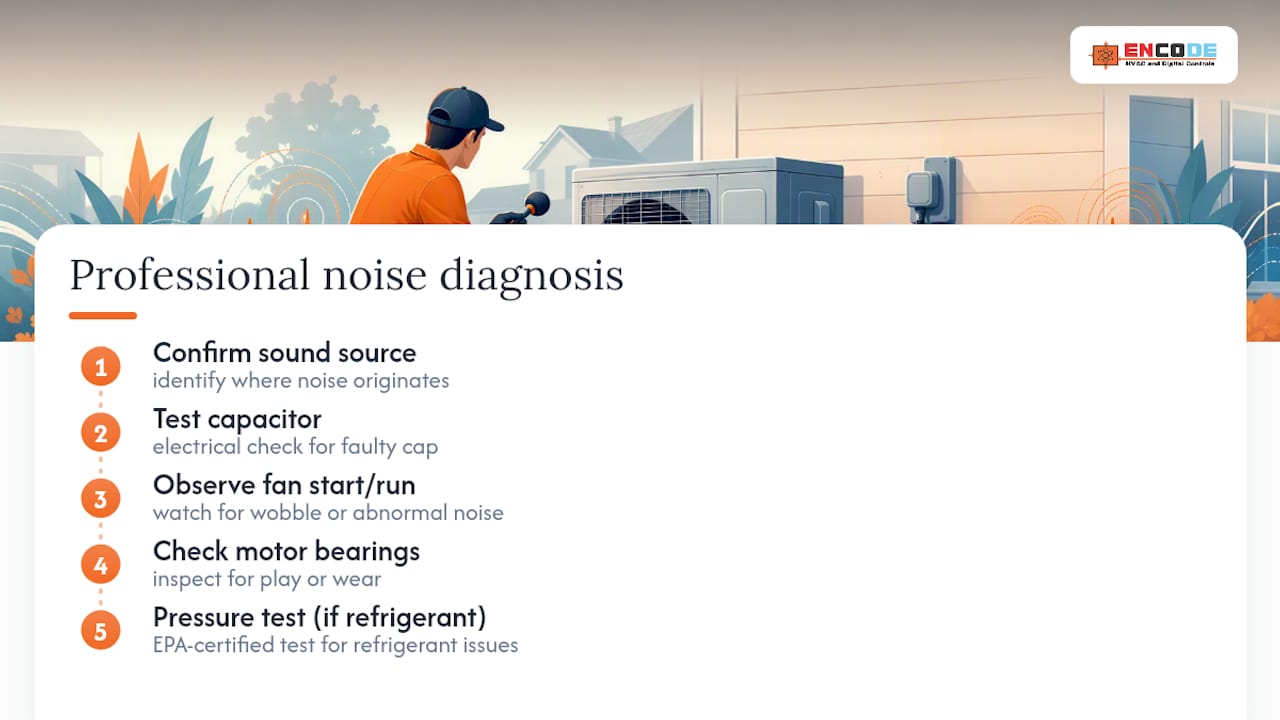
On a typical service call, a technician confirms the sound's source, tests the capacitor, watches how the fan starts and runs, and checks the motor bearings for play. If the noise pattern suggests a refrigerant issue, the technician performs a pressure test, a job that legally requires EPA certification and equipment most homeowners don't own.
Many of these repairs, capacitor swaps, contactor replacement, debris removal, and hardware tightening, get finished in one visit, often within one to two hours. Motor or compressor problems usually mean ordering parts, so expect a longer timeline. A scheduled maintenance plan catches most of these issues before they turn into a loud, urgent call in July.
Get Your AC's Noise Diagnosed and Fixed
There's a real cost to waiting on a noisy AC unit: a $15 capacitor left alone can strand you with a dead compressor in August. Technicians work from the same sound-to-cause priorities covered above, so a service call means a fast, accurate diagnosis instead of a guessing game.

A typical visit starts with confirming exactly what's making noise. Then testing the capacitor and contactor, watching fan operation, and checking refrigerant pressure if a leak is suspected. Most electrical and mechanical fixes wrap up same-visit. If your system needs a full look, Encode's residential HVAC repair team handles everything from a buzzing condenser to a screeching blower motor, and a maintenance plan catches worn parts before they fail loudly and expensively. If you're hearing any of the red-flag sounds covered above, book a service visit rather than waiting to see if it gets worse.
The Real Takeaway on Noisy Air Conditioners
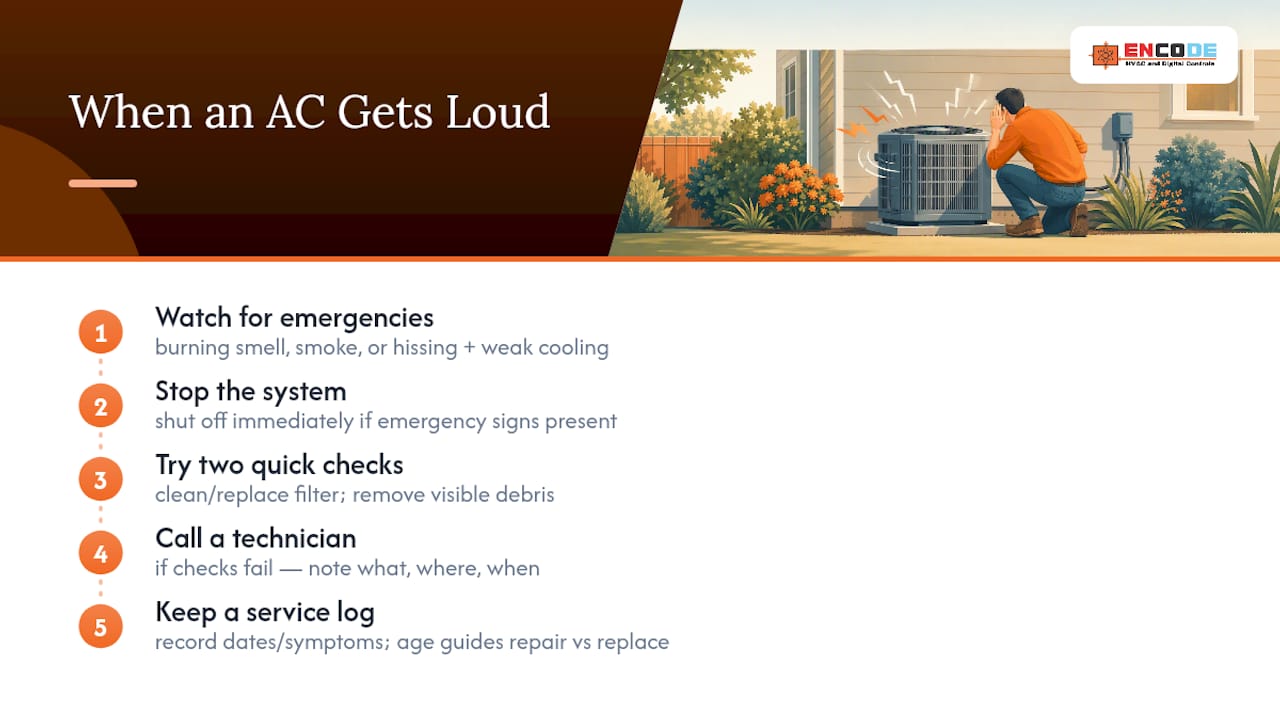
Most noisy AC calls aren't emergencies dressed up as emergencies, and most emergencies don't stay quiet for long. Here's what actually matters: stop the system the moment you notice a burning smell, smoke, or hissing paired with weak cooling. Try the two easy checks first, filter and visible debris, since they solve more cases than people expect. If neither helps, call a technician with your notes on what you heard, where, and when.
Repair versus replace usually comes down to the age of the unit and whether the failing part is minor (capacitor) or major (compressor). Keep a simple log of service dates and symptoms. It speeds up warranty claims and gives the next technician a real head start.
— Daniel
Sources
- AC Making Loud Noise | National HVAC Parts
- LG troubleshooting: acceptable operational noises
- AC unit making loud noise? What each sound means | Discount AC & Refrigeration
- InspectApedia: HVAC noise descriptions and troubleshooting