
Most cases of a mini split not heating come down to five things: the wrong mode, a setpoint too close to room temperature, a dirty filter choking airflow, a normal defrost cycle running its course, or a tripped breaker. Check the mode setting, confirm the outdoor unit has power, and pull the filters to check for dust before anything else. If you still get no heat, or you notice hissing, heavy ice that won't melt, a burning smell, or a breaker that keeps tripping, stop troubleshooting and call a certified technician.
TL;DR:
- Properly setting the heat mode and increasing the target temperature by a few degrees usually triggers the compressor within 2 to 5 minutes.
- Dirty filters, blocked vents, or debris around the outdoor unit can restrict airflow and cause warm air failure, requiring cleaning or professional inspection.
- Defrost cycles are normal when lasting 3 to 10 minutes; frequent or prolonged icing suggests low refrigerant or sensor failures needing professional diagnosis.
- Refrigerant leaks, faulty reversing valves, or electrical issues like tripped breakers often cause continued heating failure and require licensed technician repairs.
- Regular maintenance such as filter cleaning every 1 to 3 months and professional inspections once a year prevent most no-heat issues and maximize system reliability.
Table of Contents
- Why Is My Mini Split Not Heating? A 5-Minute Checklist
- Common Causes of a Ductless Heat Pump Not Heating
- Maintenance That Keeps a Mini Split From Losing Heat
- When to Call an HVAC Technician
- Encode HVAC and Digital Controls: Local Mini Split Repair in Billings
- Sources
- FAQ
Why Is My Mini Split Not Heating? A 5-Minute Checklist
Before you assume the worst, run through this sequence. It takes less time than waiting on hold with a call center, and it resolves a surprising share of "no heat" complaints on its own.
- Check the mode. Confirm the remote or wall controller shows the heat icon (usually a flame or sun symbol), not "fan" or "dry." Raise the setpoint 3 to 5°F above the current room temperature so the compressor has a reason to engage.
- Feel for airflow. Stand near an indoor vent and check whether the fan is actually pushing air. If airflow feels weak, pull the mesh filters and rinse them if they're dusty. Clogged filters are one of the most common culprits behind a mini split blowing cold air instead of warm.
- Inspect the outdoor unit. Clear leaves, snow, or debris from around it, and look for heavy ice buildup or a fan that isn't spinning.
- Check power. Look at the outdoor disconnect switch and the breaker in your panel. If the breaker tripped, reset it once and watch how the system responds.
- Try a hard reset. Cut power at the breaker for 30 seconds, then restore it. Note any blinking lights or error codes that appear on the indoor unit display.
That order matters. Verifying mode, power, and airflow first solves a large share of no-heat calls before a technician ever needs to show up.
Common Causes of a Ductless Heat Pump Not Heating
Once the quick checklist is done and the problem persists, the cause usually falls into one of a handful of categories. Some you can fix yourself. Others need a licensed hand.
Mode and setpoint mistakes trip up more homeowners than you'd expect. Setting the temperature only a degree or two above the room's current reading can leave the compressor idle since the system reads the room as "close enough." Give it a real target, then wait. A healthy compressor typically engages within 2 to 5 minutes of a valid heat call. If nothing happens after that window, move to the next cause.
Restricted airflow shows up as weak, lukewarm air even though the unit is technically running. Dust-packed filters, blocked indoor louvers, or a dirty blower wheel all choke the air the system needs to move heat efficiently. Cleaning filters yourself is fine. A blower wheel caked in dust or debris usually needs a technician to pull the housing apart, since damaging the fan blades on a DIY attempt turns a simple cleaning into a parts replacement.
- Rinse mesh filters under lukewarm water and let them air dry fully before reinstalling
- Check that indoor louvers open freely and aren't stuck at an angle
- Listen for a labored or rattling fan motor, which signals a blower issue beyond simple dust
Defrost cycles versus real icing problems confuse a lot of people, and understandably so. Ductless mini-splits are air-source heat pumps, and pulling heat from cold outdoor air naturally frosts the outdoor coil. A normal defrost cycle runs for roughly 3 to 10 minutes, during which the indoor fan may pause or blow cool air. That's not a malfunction. If defrost cycles are running every 20 to 30 minutes, or the outdoor coil re-ices within minutes of finishing one, something else is wrong, often low refrigerant or a failing defrost sensor.
Pro Tip: Time a defrost cycle with your phone. If it clears in under 10 minutes and the unit resumes heating normally, leave it alone. Repeated cycles that never fully clear the ice are the signal to call for service.
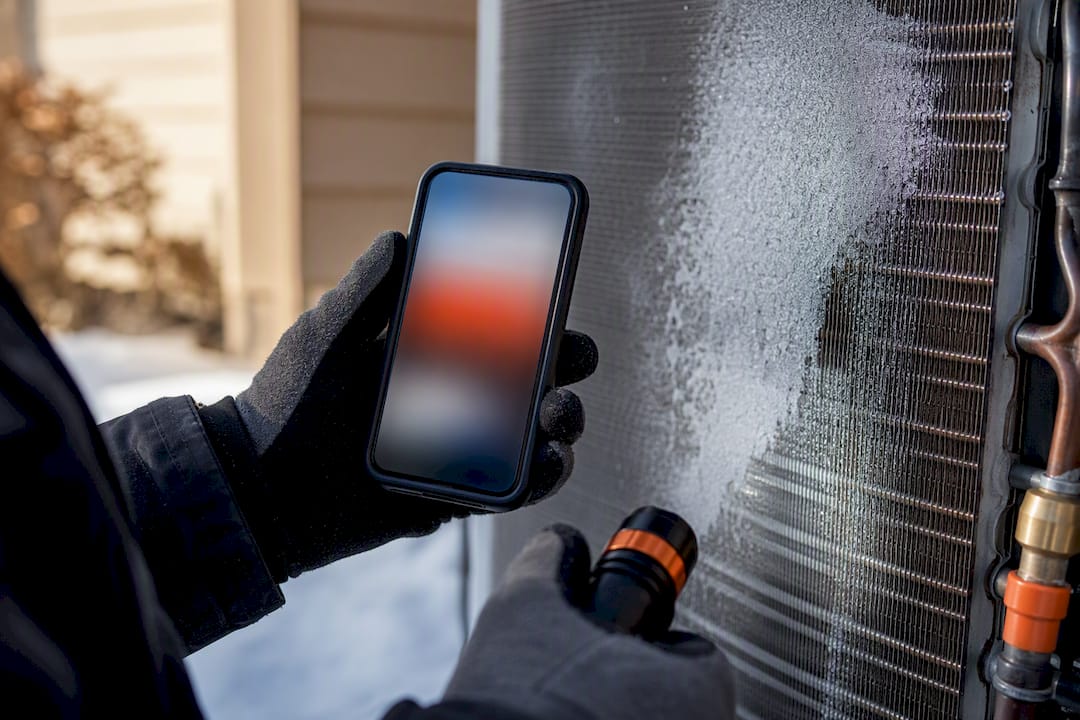
Low refrigerant produces a specific pattern: air that feels lukewarm rather than cold or hot, visible ice forming on the refrigerant lines or outdoor coil outside a defrost cycle, and sometimes a faint hissing sound near the lines. Refrigerant issues are never a DIY repair. Under EPA Section 608 rules, only certified technicians can legally handle refrigerant, and running a system low on charge risks damaging the compressor. If you suspect a leak, shut the system off and call for service rather than letting it keep running.
A stuck reversing valve is a distinctive failure. The system happily blows cold air in summer but refuses to produce heat in winter, because the valve that redirects refrigerant flow between modes has failed to switch. This is a common but frustrating cause of a ductless heat pump not heating despite cooling working fine, and replacing the valve is a job for a licensed technician.
Electrical faults include a breaker that trips repeatedly, a disconnect switch that's failed, or scorch marks near the outdoor unit's electrical panel. A one-time trip after a storm is worth a single reset. A breaker that trips again within minutes means there's a short or overload somewhere in the system, and repeated resets risk further damage. Industry troubleshooting resources consistently point to the same short list of usual suspects: wrong mode, dirty filters, coil problems, low refrigerant, and electrical faults account for the overwhelming majority of heating complaints.
Sensor, compressor, or circuit board failures tend to show up as odd noises, a unit that runs constantly without ever producing heat, or an error code that won't clear after a reset. These almost always require a technician with diagnostic tools to isolate the failed component.
Maintenance That Keeps a Mini Split From Losing Heat
A lot of "no heat" service calls trace back to the same avoidable habits: dirty filters, a blocked outdoor unit, and skipped inspections. A little routine care heads off most of it.
- Keep 18 to 24 inches clear around the outdoor condenser at all times, and check for storm debris or piled leaves during fall cleanup.
- Schedule a professional inspection once a year. Homes relying on the mini split as a primary heat source through Montana winters should consider checking the system twice a year instead of once.
- Set a steady thermostat schedule rather than flipping the system on and off manually throughout the day, since frequent short cycling adds wear to the compressor and reversing valve over time.
When to Call an HVAC Technician
Some symptoms don't belong on a DIY checklist. Call for service immediately if you smell burning, see sparks or smoke, notice the breaker tripping repeatedly, or spot oily residue near refrigerant lines, which often signals a leak.
Beyond those red flags, bring in a technician when the unit runs continuously without ever producing heat, the outdoor coil re-ices within minutes of finishing a defrost cycle, or you hear hissing or bubbling near the refrigerant lines.
To speed up the visit, have this ready before the technician arrives:
- The unit's brand and model number, found on the indoor unit's label
- The approximate age of the system
- A clear description of the exact symptoms, including when they started
- Any error codes or blinking indicator lights you've seen
- What you already tried from your own quick checks
A technician will typically run diagnostic pressure checks, search for refrigerant leaks, test the defrost sensor, check the reversing valve and compressor, and inspect the electrical components. Giving them your notes upfront often cuts a two-visit diagnosis down to one.
Encode HVAC and Digital Controls: Local Mini Split Repair in Billings
If your quick checks and filter cleaning didn't bring the heat back, the next step isn't guessing, it's getting eyes on the system. Experienced local technicians have spent decades diagnosing exactly these failures for homeowners in the Billings, Montana area, and the fix is often faster than people expect once a certified technician is standing in front of the unit.

Refrigerant leaks, stuck reversing valves, and failing compressors all need a trained hand, and Encode's technicians handle refrigerant work in line with EPA certification requirements rather than the guesswork that leads some homeowners into bigger repair bills. Beyond one-time repairs, Encode's mini split services cover diagnosis, repair, and installation for homes running into exactly the problems this guide walks through. For anyone tired of dealing with the same issue every winter, a maintenance plan catches filter buildup, refrigerant issues, and electrical wear before they turn into a cold house at 6 a.m.
Fast local response and a team that actually explains what they find are the difference between a quick fix and a repeat service call. If your mini split still isn't heating after working through this guide, book a diagnosis with Encode HVAC and Digital Controls and get it sorted before the next cold snap.
Sources
FAQ
Why is my mini split blowing cold air when it's in heat mode?
This is almost always a normal defrost cycle, which runs 3 to 10 minutes and temporarily pauses heating to clear ice from the outdoor coil. If cold air continues well past 10 minutes or happens every 20 to 30 minutes, low refrigerant or a sensor fault is a likely cause and worth a technician visit.
Why isn't my mini split going into heat mode?
The most common reason is a mode or setpoint error: the controller isn't actually set to heat, or the target temperature is too close to the current room temperature to trigger the compressor. Check the controller display first, then confirm the outdoor unit has power and isn't blocked by ice or debris.
Is there a reset button on mini splits?
Most ductless systems don't have a dedicated reset button; instead, you reset them by cutting power at the breaker for about 30 seconds and restoring it. This clears minor electrical glitches and often resolves a frozen display or unresponsive remote.
Why is my heat pump fan running but I'm not getting any heat?
A fan that runs without producing heat usually points to a failed component rather than a settings issue, most often a stuck reversing valve, a failing compressor, or a refrigerant problem. Since refrigerant repairs require an EPA-certified technician, this symptom is a strong signal to schedule a service call rather than keep troubleshooting.