
A musty smell from your vents usually means moisture inside the cooling system that's letting mold or bacteria grow. Check or replace your air filter and inspect the condensate drain and pan first. If you find standing water, visible mold, or anyone in the house is having breathing trouble, shut the system off and call a technician before doing anything else.
TL;DR:
- A persistent musty smell that lasts more than 48 hours indicates active mold or bacterial growth rather than seasonal dust.
- The most common cause is moisture buildup on the evaporator coil or clogged condensate drain, which promotes microbial growth.
- DIY fixes are limited to replacing filters and flushing accessible condensate lines; deeper issues like mold on coils require professional cleaning.
- Signs requiring a technician include mold inside ducts, standing water, electrical smells, frost on coils, or recurring odors despite maintenance.
- Preventive measures such as regular filter changes, annual tune-ups, and condensate line flushing can significantly reduce future mold growth.
Table of Contents
- Quick Checklist to Confirm Your HVAC Is the Source
- What's Actually Causing That Moldy HVAC System Smell
- How to Fix a Musty AC Smell Yourself
- When to Call an HVAC Technician
- Building a Maintenance Plan That Keeps Smells From Coming Back
- What 40 Years of Service Calls Teach You About Musty Smells
- Why Homeowners Get This Wrong More Often Than You'd Think
- Get a Musty HVAC Smell Handled Before It Comes Back
- Sources
Quick Checklist to Confirm Your HVAC Is the Source
Before you assume the worst, spend 10 to 20 minutes ruling things in or out. A musty ac smell that shows up only when the system first kicks on for the season is a different animal than one that lingers all day, and the pattern you notice tells you how urgent this is.
- Note the timing. A smell that hits only at startup and fades within a day or two is often just dust burning off or light condensation from the season's first run, according to BobVila. A smell that persists past 48 hours points to something growing, not just settling.
- Note the scope. One room smelling musty usually means a local duct problem near that register. Whole-house odor points to the air handler, coil, or main trunk line.
- Pull the filter. If it's wet, sagging, or visibly clogged with dust, replace it now. A saturated filter is both a cause and a symptom.
- Look at the indoor unit and drain pan. Standing water or a fuzzy, dark film anywhere near the coil is a clear sign.
- Check airflow at the registers. Weak airflow at multiple vents suggests a blockage or a frozen coil somewhere upstream.
- Smell for anything besides musty. A rotten egg smell means gas. A hot, burning smell means an electrical or motor problem. Stop the checklist and call for help immediately if you notice either.
Pro Tip: Keep a phone note of when the smell shows up: first startup, after rain, only in humid weeks. That pattern is often the single fastest clue a technician uses to find the cause without tearing into your ductwork.
What's Actually Causing That Moldy HVAC System Smell
Musty air in HVAC systems almost always traces back to moisture sitting somewhere it shouldn't. Your air conditioner pulls humidity out of the air as a normal part of cooling, and in humid weather a residential system can pull several gallons of water out of the air per day. That water has to go somewhere, and when the drainage path gets interrupted, you get a breeding ground.
- Evaporator coil biofilm. The coil stays cold and wet during every cooling cycle. Dust and organic debris stick to that moisture, and the combination becomes a habitat where mold and bacteria multiply. Trane points to this coil buildup as one of the most common sources of a musty ac smell, and cleaning it commonly resolves the odor entirely.
- Clogged condensate line or a full drain pan. The line that carries coil condensation outside can clog with algae and sludge over a season or two. Once it backs up, water pools in the drain pan, sometimes overflowing onto the floor beneath the unit.
- Ductwork mold and leaks. Ducts running through attics or crawl spaces face a specific problem: temperature swings between the cold air inside the duct and the warmer, humid air outside cause condensation to form on the duct's interior surfaces, which feeds mold growth over time. If the smell is stronger at certain registers than others, this is often why.
- Wet or saturated filters restricting airflow. A filter clogged with moisture doesn't just smell bad on its own. It also slows airflow across the coil, which keeps everything downstream wetter for longer.
- Frozen coils and thermal cycling. When a coil freezes from low refrigerant or poor airflow, the ice traps moisture and debris. As it thaws, that trapped water releases all at once, and the smell can hit hardest right when you'd expect the system to be running cleanest.
None of these causes are exotic. They're all versions of the same problem: water sitting where airflow should be moving it out.
How to Fix a Musty AC Smell Yourself
You can safely handle a handful of these fixes yourself. The line to know is this: anything you can reach without opening the air handler cabinet or crawling into the ductwork is fair game. Anything past that belongs to a professional, because improper cleaning inside a coil or duct can actually spread mold spores through the house instead of removing them, as HVAC technicians widely caution.
- Replace the filter. Use a filter rated for your system, not just the cheapest one on the shelf, and replace it on a schedule rather than waiting for it to look dirty.
- Flush the condensate drain. Locate the exterior cleanout, usually a capped PVC pipe near the outdoor unit or in the basement near the air handler. Pour a cup of distilled white vinegar down it to break up algae, or use a wet/dry vacuum at the cleanout to pull a clog free, a method Trane also recommends. If the line clogs repeatedly, ask a technician about installing a float switch, which shuts the system down automatically before a clog causes an overflow.
- Empty and dry the drain pan. With the system powered off at the disconnect, remove standing water and wipe the pan down. If you see cracks, rust, or corrosion, the pan itself needs professional replacement rather than a cleaning.
- Clean what you can reach. Wipe down registers and any visible, exposed housing near the blower with a mild detergent and warm water. Skip the disinfectant sprays aimed into vents. They don't reach the actual mold source and mostly just mask the bad smell from air conditioner components without solving anything, a point UMass Environmental Health and Safety also makes about air freshener products generally.
- Restore airflow. Make sure furniture, rugs, or curtains aren't blocking return vents, and open any closed supply registers throughout the house. If the blower itself needs cleaning, that's a job for a technician, since it requires opening the cabinet and working around electrical components safely.
Pro Tip: Always kill power at the disconnect switch before opening any panel on the indoor unit. If you see frost on the refrigerant line or the coil itself, that's a mechanical issue, not a cleaning problem, and it needs a licensed technician.
When to Call an HVAC Technician
Some signs mean stop the DIY checklist and pick up the phone. A musty smell that persists after you've changed the filter and flushed the drain usually means the contamination has spread further than you can reach, most likely into the coil fins or the duct interior itself.
- Visible mold inside the ducts or air handler that goes beyond a light film.
- Standing water that keeps returning even after you've cleared the drain line.
- Anyone in the house developing coughing, headaches, or allergy flare-ups that seem to track with the system running.
- Frost or ice on the coil or refrigerant lines, which points to a refrigerant leak or airflow problem that needs diagnostic equipment.
- A burning smell coming from the blower motor, which is an electrical issue and a fire risk if ignored.
- Structural water damage near the unit, suggesting a leak has been going on longer than you realized.
A technician's visit for a musty HVAC system typically includes coil cleaning with an antimicrobial treatment, condensate line repair or a pump/float switch installation, drain pan replacement if it's corroded, and duct cleaning performed to standards set by NADCA, the industry body for certified duct cleaning. For ducts running through an attic or crawl space, sealing and insulating the joints is often part of the fix, since temperature differentials there are what create the condensation problem in the first place.
Building a Maintenance Plan That Keeps Smells From Coming Back
Preventing a moldy HVAC system from developing in the first place is far cheaper than remediating one. The fixes above solve today's problem. This is what stops next summer's.
- Filters: Replace standard filters every 30 to 90 days depending on quality, per Trane's maintenance guidance. Homes with pets or allergy sufferers should aim for the shorter end of that range.
- Professional tune-ups: Schedule an AC tune-up every spring before cooling season starts, and consider a second visit mid-summer if you live somewhere humid.
- Condensate checks: Flush the drain line with vinegar at the start of each cooling season as routine maintenance, not just when you notice a problem.
- Humidity control: A whole-house dehumidifier helps in consistently humid climates, and a UV-C light installed near the coil works best as backup protection after a professional cleaning, not as a replacement for one, since UV-C reduces recolonization but doesn't remove existing buildup.
- Duct sealing: If your ducts run through an attic or crawl space, ask a technician to check seals and insulation as part of your next visit. A structured preventive maintenance approach treats this kind of small, recurring check as cheaper than the repair it prevents.
What 40 Years of Service Calls Teach You About Musty Smells
Encode Corporation has spent more than 40 years running service calls across Billings and the surrounding area, and a musty HVAC system smell is one of the most common reasons homeowners pick up the phone. The pattern holds steady year after year: it's rarely a mystery, and it's almost never one single cause.
Our technicians run the same fast checks a homeowner can mirror safely: filter condition, drain pan for standing water, and airflow at the nearest registers, before ever opening a cabinet. What separates a service call from a DIY fix is usually the coil itself. Once biofilm builds up on those fins, proper cleaning needs the right chemicals and equipment to avoid pushing spores further into the ductwork.

Maintenance plans, emergency service calls, and coil and condensate repairs exist specifically to catch these problems before they turn into an all-day odor.
Why Homeowners Get This Wrong More Often Than You'd Think
Most advice about a musty HVAC smell treats it as a single-cause problem: find the one thing, fix it, done. That framing sets people up for frustration, because in practice two or three small issues usually stack together. A slightly clogged drain line combines with a filter that's overdue for replacement, and the airflow slowdown from one makes the other worse.
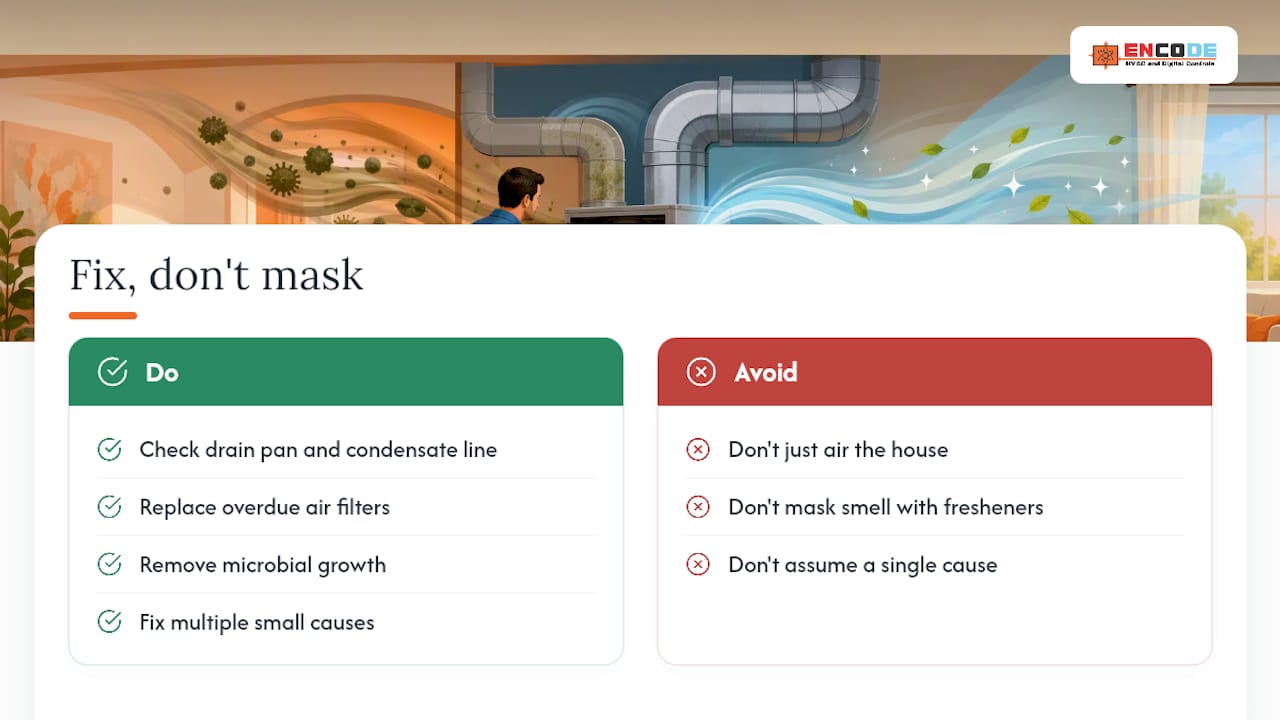
The conventional wisdom that undersells the risk is the advice to just "air the house out" or run a fan for a day. That treats a musty smell like a stale-air problem instead of what it usually is: active microbial growth that needs to be physically removed, not ventilated away. Masking it with a plug-in air freshener is worse than doing nothing, because it removes your ability to track whether the smell is getting better or worse while the underlying growth keeps spreading.
If you take one thing from this, prioritize the drain pan and condensate line before anything else. It's the cheapest, fastest check, and it's the one homeowners skip most often simply because it's out of sight.
— Daniel
Get a Musty HVAC Smell Handled Before It Comes Back
A musty HVAC smell that survives a filter change and a drain flush usually means the coil or ductwork needs hands-on attention that goes beyond what's safe to do yourself. Same-day service calls are available in the Billings area, and HVAC maintenance plans are designed specifically to catch coil buildup and condensate problems before they turn into an odor you can smell from another room.

A maintenance visit for a musty smell typically includes a coil inspection and cleaning, a check of the condensate line and drain pan, an airflow test at your registers, and a straightforward explanation of what's causing the smell in your specific system. If your home smells fine now but you want to keep it that way through the humid months, enrolling in a maintenance plan is the most direct way to skip the emergency call altogether. Reach out to schedule a maintenance visit and get ahead of the problem before next cooling season starts.
Sources
- Trane — Why does my AC smell musty?
- Inspectapedia — Find the Source of HVAC Duct Odors
- UMass EHS — Air fresheners guidance
- AirFlow Solutions — Why your HVAC smells musty