
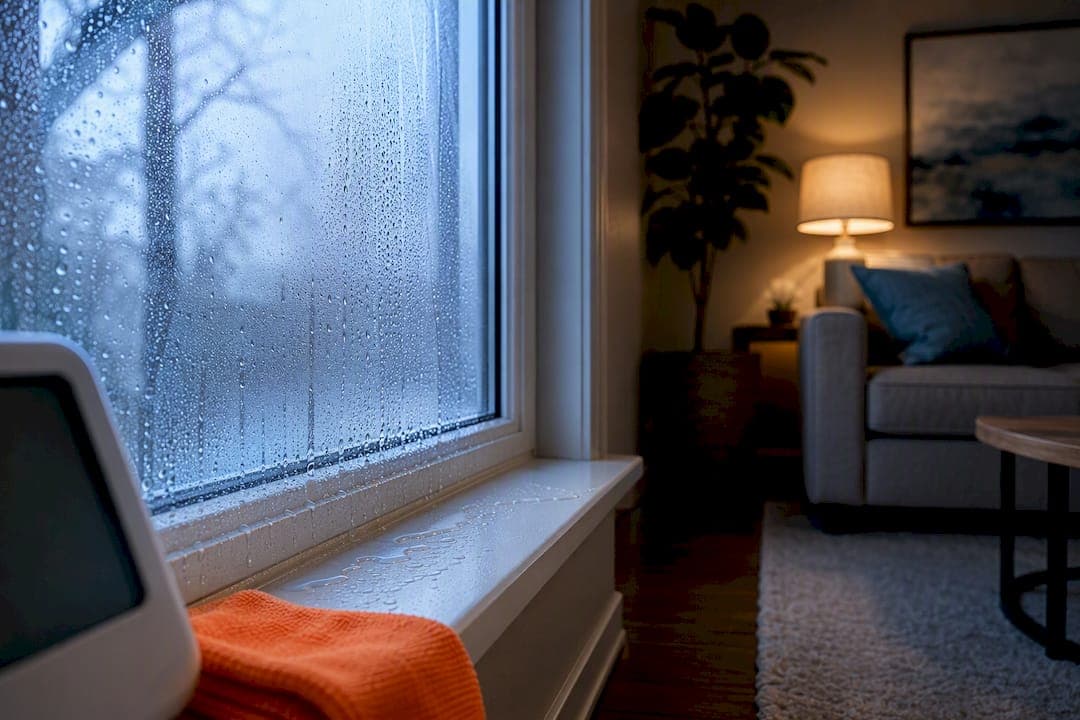
The EPA recommends keeping indoor humidity below 60%, ideally between 30% and 50%. If your house reads higher than that, or your windows are wet every winter morning, moisture is building up faster than it’s leaving. Grab a hygrometer, check the reading, and cut the obvious sources today: long showers, cooking steam, a leaky pipe, or a furnace humidifier set too high. If it stays high after a few days of fixes, it’s time to call an HVAC technician.
TL;DR:
In Billings, high indoor humidity usually comes from inside the house: showers, cooking, a furnace humidifier set too high, damp basements, or poor ventilation in newer, tighter homes.
Wet or frosted windows in winter are the most common sign. When it’s near or below zero outside, most homes need to stay around 20–30% humidity to keep windows dry.
Quick fixes: run exhaust fans, turn down the humidifier, dry wet areas within 24–48 hours, and run a dehumidifier in the basement.
If humidity stays high after a week of fixes, have a technician check your humidifier, ventilation, and ductwork.
Annual maintenance catches stuck humidifier valves, clogged drains, and dirty coils before they turn into moisture problems.
Table of Contents
Quick Actions to Lower High Humidity Today
You don’t need a contractor to make a dent in high indoor humidity this afternoon. Most homes can drop several percentage points of relative humidity (RH) within a day just by fixing habits and airflow.
Start here, in order:
-
Get a hygrometer and log readings. A $10 digital hygrometer in the bathroom, basement, and main living area tells you which rooms are the most humid", and gives you a baseline to measure progress against.
-
Turn down your furnace humidifier. If you have one, check the dial (usually on the ductwork near the furnace). In a Montana winter, a humidifier set too high is one of the most common causes of wet windows.
-
Run exhaust fans every time you shower or cook. Leave the bathroom fan on for 20 to 30 minutes after a shower, and always vent your range hood outside, not just recirculate it.
-
Vent the dryer outdoors and skip indoor laundry drying. A dryer venting into a basement, or a rack of wet towels in the living room, can add gallons of water vapor into your air over a week.
-
Set a portable dehumidifier to 50 to 55% RH, or switch your AC to continuous fan mode if the air feels damp but not warm enough to trigger cooling.
-
Open a window on dry days. Billings air is usually drier than the air inside your house, so a few minutes of fresh air helps. Skip it during rain or a muggy summer stretch.
-
Dry any wet carpet, flooring, or furniture within 24 to 48 hours. Wipe visible condensation off windows and cold pipes, and point a fan at damp spots to speed up drying.
Pro Tip: Keep a small notebook or phone note of your hygrometer readings for a week. Patterns matter more than a single number.
What’s Really Causing High Humidity in Your House?
High indoor humidity almost always comes from one of four places: too much moisture going in, not enough moisture escaping, outside air infiltrating unchecked, or an HVAC system that isn’t doing its job. Figuring out which one applies to your house tells you whether you need a cheap fan or a bigger repair.
Everyday indoor moisture sources add up fast. A family of four showering, cooking, and breathing releases several pints of water vapor into the air daily. Add an unvented gas stove, a fish tank, houseplants, or a crawlspace with exposed soil, and you’ve built a humidity problem without ever noticing water on the floor.
Common indoor sources include:
-
Long showers and baths without the exhaust fan running
-
Cooking without a range hood vented outside
-
Drying laundry indoors, or a dryer vented into the basement
-
A furnace humidifier set too high, or with a valve stuck open
-
A swamp (evaporative) cooler, which adds moisture by design
-
An unfinished basement or crawlspace with exposed soil
Your home’s envelope might be letting moisture in from outside. Cracks around windows, gaps in siding, and negative pressure inside the house (often caused by exhaust fans pulling more air out than makeup air coming in) can draw humid outdoor air through walls and foundations. Basements and crawlspaces are especially vulnerable, since they sit close to soil moisture and often lack proper vapor barriers.
Your air conditioner may not be removing enough moisture. An AC pulls moisture out of the air while it cools. An oversized unit cools the house fast and shuts off before it gets the chance. In Billings this matters less than in humid states, but it’s worth checking if your house feels clammy in July.
Signs and Health Risks of High Humidity
Your house usually tells you it’s too humid before a hygrometer confirms it. Persistent window condensation, a musty smell in closets or basements, and an AC that runs constantly but never quite feels comfortable are the earliest warning signs.
Watch for these red flags:
-
Water or frost on the inside of your windows in winter
-
Condensation on windows, especially in the morning
-
A musty or “damp basement” smell in any room
-
Visible mold or mildew spots on walls, grout, or window sills
-
Wood doors, cabinets, or floors that stick, swell, or warp
-
Clammy air that never feels cool even when the AC is running
The EPA recommends keeping indoor humidity below 60%, ideally 30–50%. Short spikes after a shower or cooking are normal. Readings that stay above 60% for days raise the risk of mold and moisture damage.
The health stakes go beyond comfort. NIOSH and CDC research on damp buildings has found meaningfully higher rates of respiratory issues among occupants, including increases in current asthma, wheeze, and upper respiratory symptoms compared to drier buildings. If anyone in your house has developed new coughing, congestion, or asthma flare ups that seem tied to being home, that’s worth mentioning to a doctor, per CDC guidance on mold exposure.
Timing matters for structural risk too. The EPA recommends drying out any wet material within 24 to 48 hours of getting wet, whether that’s a flooded basement carpet or a leaky window sill. Past that window, mold growth becomes much harder to stop with simple cleaning.
When to act immediately versus monitor: visible mold, standing water, or a moldy smell that wasn’t there last month all call for same-day attention. A reading that jumps to 55% after showers but drops back overnight is normal. One that stays above 60% for days is not.

How to Lower Humidity Indoors, Step by Step
Fixing high humidity works best as a sequence: stop adding moisture, remove what’s already there, then correct the systems that should have been handling it automatically.
1. Cut moisture at the source first. Fix dripping faucets, leaking supply lines, and any visible plumbing leaks before buying equipment. A slow leak under a sink can add more humidity over a month than a dozen showers.
2. Check the furnace humidifier. Turn the humidistat down. If water keeps running to the drain when the furnace is off, the valve may be stuck open. That’s a quick repair for a technician.
3. Rethink how your AC runs. Continuous fan mode helps circulate air but won’t remove moisture on its own; the compressor has to run long enough to condense water out of the air. If your system short-cycles (runs in quick bursts), that’s a sizing or control issue worth flagging to a technician rather than something a thermostat setting fixes.
4. Match ventilation to the problem. Exhaust fans handle point sources like bathrooms and kitchens. If your whole house feels stale and humid, not just one room, a balanced mechanical ventilation system might make more sense than running exhaust fans nonstop, especially in a tightly sealed newer home.

5. Seal the envelope where moisture sneaks in. Caulk gaps around windows and pipes, insulate exposed cold water pipes to stop condensation, and address crawlspace vapor barriers if you have exposed soil underneath the house.
| Fix | Who does it | Time to See Results |
|---|---|---|
| Exhaust fan habits (no new equipment) | Homeowner | Same day |
| Turn Down or Repair Furnace Humidifier | Homeowner/Technician | 1–2 days |
| Portable dehumidifier in Basement | Homeowner | 1-2 days |
| Seal and insulate pipes and windows | Homeowner | Same Week |
| Ventilation or Duct Repair | Technician | Within a Week |
| Whole house humidity controls | Technician | Immediate on startup |
Source control is nearly free. Equipment fixes cost more. The goal is to fix the cause, not keep managing the symptom every winter.
Is Your Humidifier or AC the Problem?
An air conditioner that cools the house but leaves it feeling sticky is one of the most common and most misunderstood humidity complaints homeowners bring up. The unit isn’t broken in an obvious way. It’s just not running the way it needs to in order to pull moisture out of the air.
Signs your furnace humidifier is the problem:
-
Windows sweat or frost every morning once it gets cold
-
The humidistat is set above 35–40% in winter
-
Water runs to the floor drain even when the furnace isn’t running
-
The humidifier pad is crusted with minerals (common with Billings water)
Signs your system isn’t dehumidifying properly:
-
Short run cycles: the AC kicks on, cools quickly, and shuts off within a few minutes
-
Little to no condensate draining from the unit during humid weather
-
Humidity climbs noticeably in the minutes right after the compressor shuts off
-
The house feels cool but clammy, never crisp
Checks you can do yourself before calling anyone:
-
Replace the air filter if it hasn’t been changed in the last one to three months
-
Look for visible ice buildup on the indoor coil, which points to airflow or refrigerant problems
-
Check the condensate drain line for clogs, algae, or standing water backing up
Oversized units are a frequent culprit: they satisfy the thermostat before they’ve run long enough to remove adequate moisture, cooling the room while leaving the air damp.
What a technician typically finds and fixes: refrigerant charge that’s too low or too high, airflow restrictions from dirty coils or blocked returns, duct leaks pulling in unconditioned attic or crawlspace air, or a system that was simply oversized for the square footage at installation. Sometimes the fix is a repair. Sometimes it’s adding a dedicated dehumidification component tied into the existing ductwork, which lets the AC handle temperature while a separate unit handles moisture.
Pro Tip: Ask your technician for actual runtime data, not just a temperature reading. A system that satisfies the thermostat in eight minutes when it should run for twenty is telling you more about your humidity problem than any single number on a hygrometer.
When to Call a Professional for Humidity Problems
Some humidity problems clear up after a few days of running fans and changing habits. Others mean your HVAC system or your house needs a professional, and waiting only lets the moisture damage build.
Call a pro if you see any of these:
-
Humidity stays above 60% for more than a week, even after you've cut the moisture sources
-
Windows stay wet every morning, even after you turn the humidifier down
-
Visible mold anywhere in the house, no matter how small
-
Condensation on windows or pipes that comes back every day after you wipe it off
-
Recent water coming in from a roof leak, foundation crack, or plumbing failure
What a diagnostic visit usually includes:
-
Humidity readings in several rooms to find where it spikes
-
A check of the furnace humidifier: setting, valve, and pad
-
A ductwork inspection for leaks or disconnected runs pulling in damp air
-
A coil inspection and refrigerant check on your AC or heat pump
-
A look at the house itself: gaps, missing insulation, or moisture in the basement or crawlspace
Questions to ask before you hire anyone:
-
Can you show me examples of humidity problems you've fixed?
-
What warranty comes with the repair or equipment?
-
Will this lower my humidity, my energy costs, or both, and how will we measure it?
-
Can this work with my existing controls, or does it need a separate system?
Costs depend on the job. Sealing and insulation fixes are usually the least expensive. A dedicated dehumidifier or humidity controls cost more. Fixing a badly sized or leaking system costs the most, but it's also the fix most likely to solve the problem for good.
Why Preventative HVAC Maintenance Matters for Humidity
In 48 years of service calls around Billings, we've found that humidity problems that seem sudden usually build for months: a dirty coil, a clogged drain, a humidifier valve stuck open, or a setting nobody has touched since last winter. Scheduled maintenance catches those before they show up as wet windows or a musty basement.
Clean coils remove moisture the way they were designed to, and drains that get checked don't back up in the middle of summer. Digital controls can adjust indoor humidity automatically as the outdoor temperature drops, so your windows stay dry on a −10° morning without anyone touching the dial.
Get Your Humidity Under Control With Encode HVAC and Digital Controls
A portable dehumidifier treats the symptom. We find the cause, whether it’s a humidifier stuck open, a basement with no ventilation, an AC that’s oversized, or ductwork pulling in damp air.

Our AC repair and replacement and furnace services cover the equipment side. A residential maintenance plan keeps coils clean, drains clear, and humidifiers set right season to season. For larger homes and commercial buildings, our building automation and controls manage humidity automatically.
Call (406) 245-2520 or request service online. We’ll tell you plainly whether it’s a simple fix or something bigger.
This article is general information. If you have health concerns related to mold or damp air, talk to your doctor.
Sources
For health and moisture guidance, see the EPA and CDC/NIOSH resources below.
FAQ
Why is my house at 70% humidity?
Usually several things at once: showers, cooking, laundry, and poor ventilation. In winter, check your furnace humidifier first. It’s often set too high or stuck open. The EPA recommends staying below 60%.
What do I do if my house is too humid?
Run exhaust fans during and after showers and cooking. Turn down the furnace humidifier. Vent the dryer outside, fix visible leaks, and run a dehumidifier in the basement. If it’s still high after a week, call a technician.
Is 70–80% humidity in a house bad?
Yes. At that level, mold can start growing quickly, wood can swell, and people with asthma or allergies may feel worse. Treat it as a same-week fix, not something to watch.
Why are my windows wet or frosted in winter?
Warm, moist indoor air hits cold glass and condenses. When it’s below zero outside, even 35% indoor humidity can soak your windows. Turn the humidifier down until the windows stay dry.
What humidity should I keep my house at in a Montana winter?
As a rule of thumb: up to about 40% when it’s above 20°F outside, around 25–30% near 0°F, and about 15–20% when it’s −20°F. If your windows are wet, go lower.
Can my AC fix high humidity on its own?
Sometimes. A properly sized AC removes moisture while it cools. If it’s oversized or short cycling, it can leave the air damp. Encode Corporation checks runtime and airflow as part of any humidity call.