
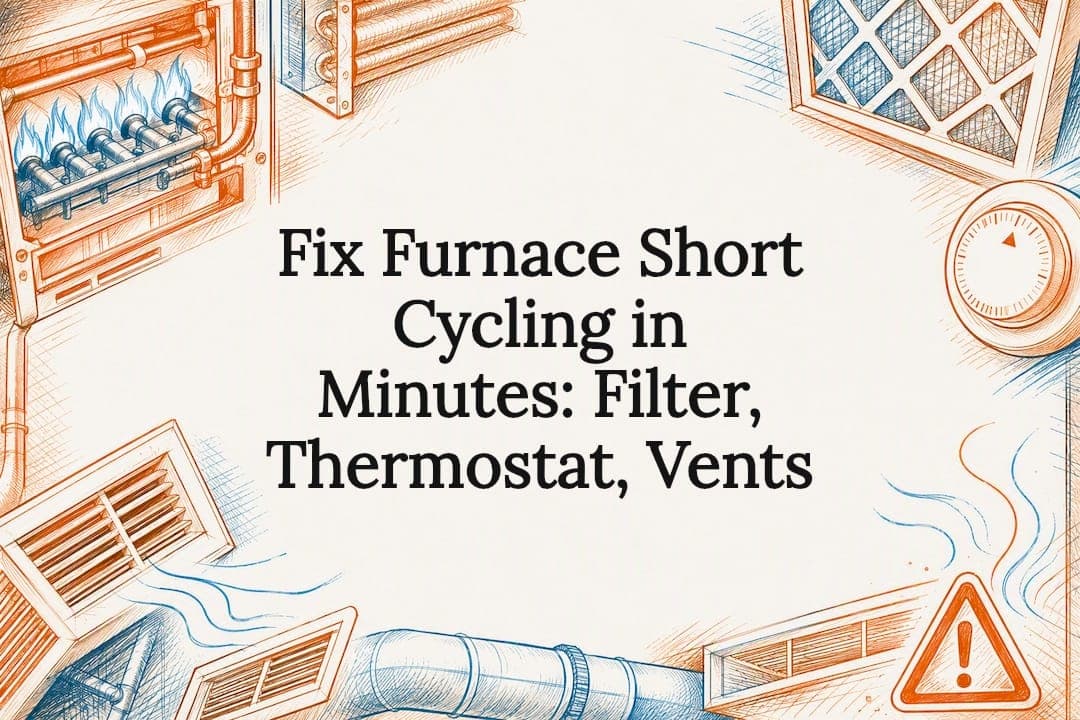
Furnace short cycling means your system is turning on, running for just a few minutes, and shutting off before finishing a normal heating cycle. The most likely fix is a dirty air filter, which you can check and replace yourself in minutes. If anyone in the home shows carbon monoxide symptoms (headache, dizziness, nausea) or a CO alarm sounds, shut off the furnace immediately and call 911.
TL;DR:
- A dirty air filter is the most common cause of furnace short cycling and should be checked and replaced every one to three months to prevent overheating.
- Short cycles lasting less than 7 to 8 minutes and recurring frequently indicate a problem, especially if the unit runs only 2 to 5 minutes each time.
- Faulty thermostats, blocked vents, or ignition issues can cause premature shutdowns, but safety concerns like a burning smell or carbon monoxide alarm require immediate professional attention.
- Repeated short cycling, especially if it lasts more than a day or causes safety symptoms, risks damaging the heat exchanger and leaking dangerous gases.
- A technician's diagnostic visit includes pressure readings, combustion analysis, fault code retrieval, and potential part replacements, with costs varying from $15 for filters to several hundred dollars for blower motor repairs.
Table of Contents
- What Does Furnace Short Cycling Actually Mean?
- Why Does My Furnace Turn On and Off So Fast?
- When Is Short Cycling Dangerous?
- What Will a Technician Check and What Does It Cost?
- How Do I Prevent Short Cycling From Coming Back?
- What I Tell Homeowners Before I Even Grab My Tools
- Get Your Furnace Diagnosed by a Local Technician
- Sources
- FAQ
What Does Furnace Short Cycling Actually Mean?
A furnace that's working correctly runs a full heating cycle, then shuts off until the thermostat calls for heat again. Short cycling breaks that pattern: the burner fires, the blower kicks on, and within a few minutes the whole thing shuts down, only to restart shortly after.
A normal heating cycle runs roughly 10 to 15 minutes, cycling about two to three times per hour in typical winter conditions. Short cycles usually last fewer than about seven or eight minutes and can repeat much more frequently, sometimes every few minutes throughout the day.
To time it yourself, grab your phone and note when the burner ignites and when the blower kicks in. Listen for how long the furnace actually runs before it shuts off, then count the minutes until it fires again. If you're consistently seeing bursts of 2 to 5 minutes rather than a steady 10 to 15 minute run, you're dealing with heater short cycling, not a system that's just running efficiently.
Why Does My Furnace Turn On and Off So Fast?
Most furnace cycling problems trace back to a small set of causes, and they're worth checking in order of how common and how easy they are to fix. Here's the priority list technicians work through first.
-
Dirty or overly restrictive air filter. This is the single most common trigger for gas furnace short cycling. A clogged filter chokes airflow across the heat exchanger, the unit overheats, and the high-limit switch trips the burner off as a safety measure. Pull the filter and hold it up to a light. If you can't see light through it, replace it. Standard residential filters should be replaced regularly, often every one to three months, matching the replacement to your system's recommended MERV rating rather than always choosing the highest-rated filter available. A filter with a MERV rating higher than your furnace is built for can increase static pressure enough to mimic the same overheating symptoms as a dirty one.
-
Thermostat problems. Dead or weak batteries, poor placement near a heat vent or sunny window, or an incorrectly set cycle rate can all cause premature shutoff. Swap the batteries first, since it costs nothing and takes thirty seconds. If the thermostat sits near a heat source, that's a job for a technician to relocate.
-
Restricted airflow elsewhere in the house. Closed supply registers, furniture blocking return vents, or a crushed duct in the basement all starve the system the same way a dirty filter does. Walk the house and open every register, then check that nothing is stacked against a return grille.
-
Flame sensor or ignition faults. If the burner lights and then shuts off within seconds every single time, that's a different pattern than overheating. It usually points to a dirty flame sensor.
-
Pressure switch, limit switch, or inducer motor issues. These require a multimeter and diagnostic training to confirm, so this is where DIY troubleshooting ends and a technician call begins.
-
An oversized furnace. If your unit is short cycling even on the coldest days and everything above checks out fine, the furnace itself may be too large for the space. A licensed tech can confirm this with a Manual J load calculation, which is the accepted standard for right-sizing a heating system to a home's actual heat loss.
Pro Tip: Watch the timing pattern closely. Cycles that shut off within seconds of ignition usually point to a flame-sensing or ignition problem. Cycles that run a few minutes before cutting out usually point to airflow or overheating. That distinction alone tells a technician where to start.
When Is Short Cycling Dangerous?
Short cycling isn't just annoying. Repeated overheating stresses the heat exchanger every time the high-limit switch trips, and metal that expands and contracts under thermal stress hundreds of times a season eventually cracks. A cracked heat exchanger allows combustion gases, including carbon monoxide, to leak into the air your blower circulates through the house.
That's the risk that turns a repair job into an emergency. If you notice a burning or metallic smell near the furnace, soot around the cabinet, or your carbon monoxide alarm goes off, shut the system down at the switch and get everyone outside. Call 911 if anyone shows symptoms like headaches, dizziness, or nausea, and don't turn the furnace back on until a licensed technician clears it.
A furnace that trips its high-limit switch or flame sensor repeatedly in the same day, rather than occasionally, should be treated as a same-day service call rather than something to monitor for a few more nights. Waiting rarely improves the outcome, and it sometimes turns a $150 sensor cleaning into a full heat exchanger replacement.
What Will a Technician Check and What Does It Cost?
A diagnostic visit typically starts with a static pressure reading across the filter and coil, a combustion analysis to check the burner flame, and an inspection of the flame sensor, high-limit switch, and pressure switch. The technician will also pull any stored fault codes from the control board, which often point straight to the failing component before a single tool comes out.
Typical repair costs run in predictable ranges:
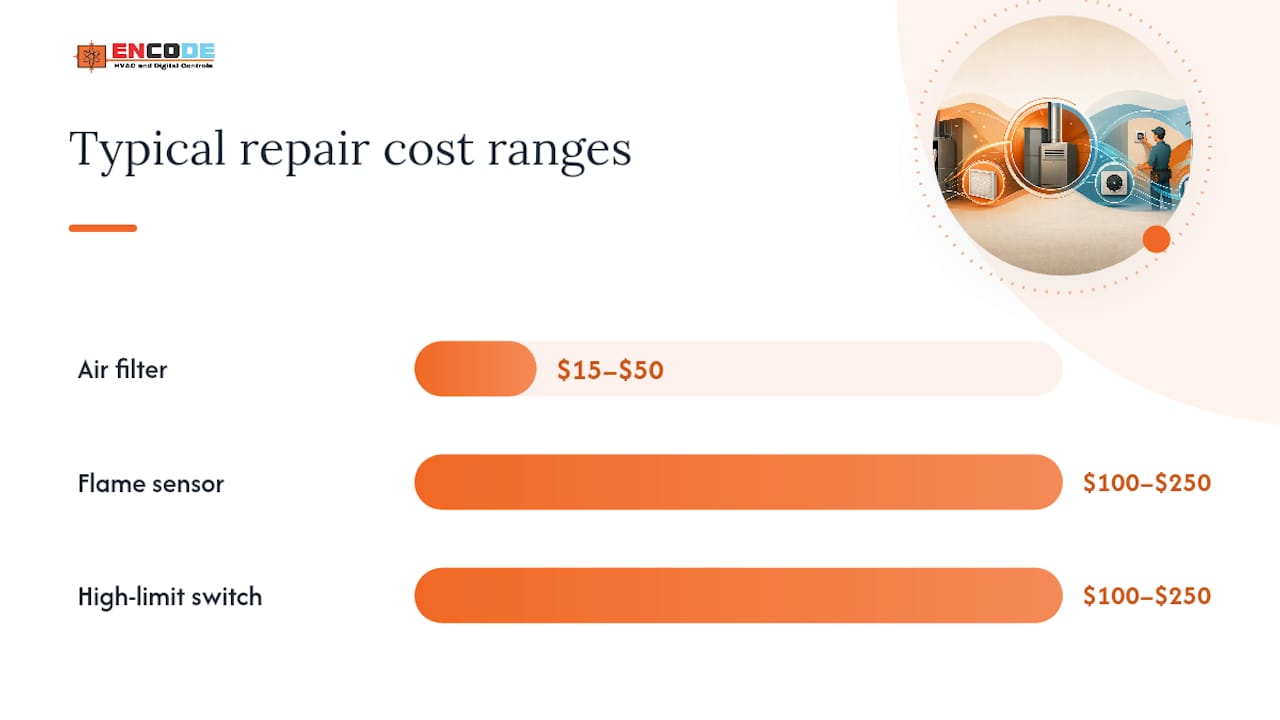
- Air filter replacement: usually $15 to $50 for the part if a technician handles it during a visit, though most homeowners can do this themselves for less.
- Flame sensor cleaning or replacement: roughly $100 to $250 installed.
- High-limit switch replacement: generally in a similar range to a flame sensor, depending on furnace model and accessibility.
- Blower motor repair or replacement: the most expensive of the common fixes, often several hundred dollars depending on the motor type.
Replacement becomes the more sensible option over repeated repairs when the furnace is confirmed oversized, when the heat exchanger is cracked, or when the unit is old enough that parts availability and repair costs start stacking up. Ask your technician directly whether a Manual J calculation supports the current unit's size, what fault codes appeared, and what safety checks were performed before they leave.
How Do I Prevent Short Cycling From Coming Back?
Most causes of furnace cycling problems are preventable with a routine that takes maybe twenty minutes a month plus one annual visit.
- Check and replace the air filter every 1 to 3 months, using the MERV rating your manufacturer specifies rather than the highest one you can find.
- Schedule an annual tune-up that includes a combustion test, blower cleaning, flame sensor inspection, and condensate trap cleaning.
- Before each heating season, walk the outside unit and check vent terminations for nests, frost, or debris that can block exhaust and trigger safety switches.
- Confirm your thermostat has fresh batteries and isn't mounted somewhere that gets direct sun or sits near a supply vent.
- Keep an eye on condensate drains on high-efficiency furnaces, since a clogged drain can trip a safety switch just like a dirty filter does.
Encode HVAC and Digital Controls has been handling exactly this kind of preventive work in Billings, Montana for over 40 years, and our residential maintenance plans are built around catching these small issues before they become an emergency call in January. Daniel, who leads much of our field diagnostic work, has seen the same handful of causes show up on service calls year after year, which is exactly why the checklist above works.
What I Tell Homeowners Before I Even Grab My Tools
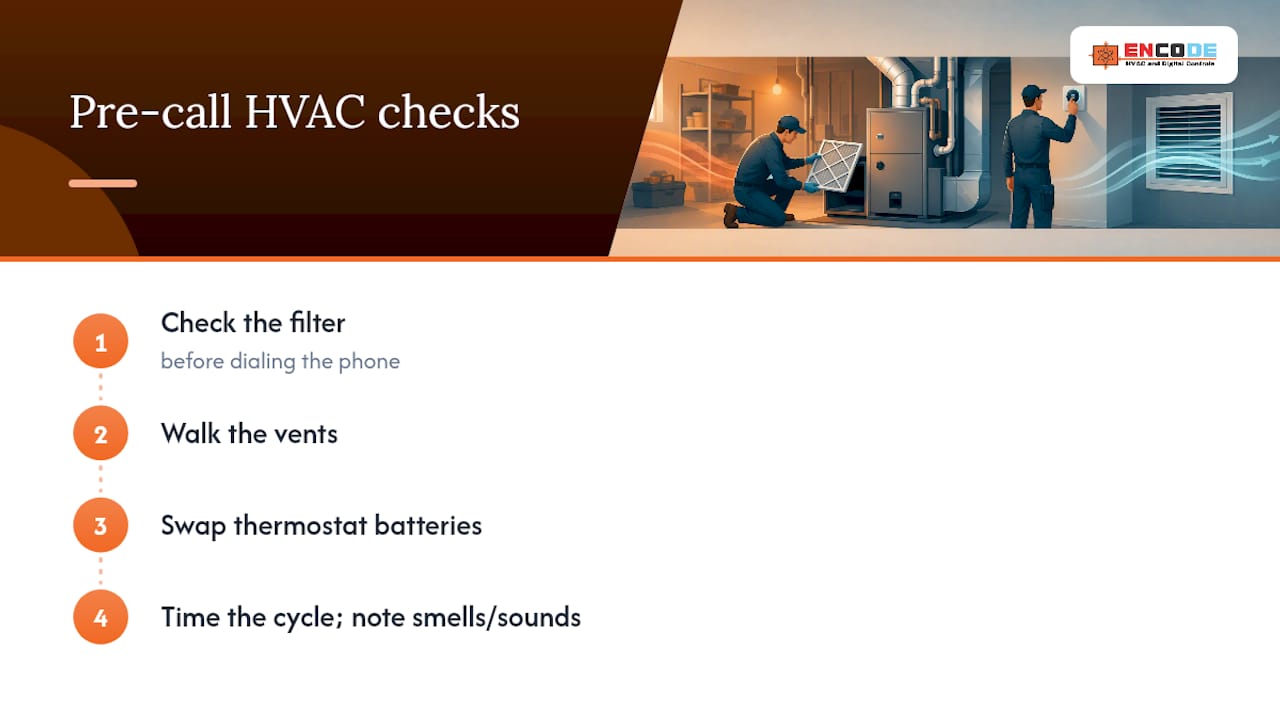
My first move on almost every short-cycling call is the same thing I'd tell you to do before dialing the phone: check the filter, walk the vents, swap the thermostat batteries, then time the cycle and note any smells or sounds. That sequence solves more calls than people expect.
Where I stop recommending DIY is repeated safety trips, an ignition that fails within seconds every time, a CO alarm, or any hint of a combustion smell. Those get same-day service, no exceptions. A real diagnostic visit isn't guesswork. It's a static pressure reading, a combustion check, and stored fault codes read straight off the board, which usually tells us the answer before we open the cabinet.
Get Your Furnace Diagnosed by a Local Technician
A dirty filter or a weak thermostat battery you can handle tonight. A cracked heat exchanger, a failing inducer motor, or a furnace that's simply the wrong size for your home needs a technician with the right tools and the training to confirm it safely. Experienced local technicians answer these calls, arriving with combustion analyzers and load calculation know-how instead of guesswork.
A typical diagnostic visit takes under an hour: we check static pressure, run a combustion test, inspect the flame sensor and limit switch, and pull any fault codes stored on your control board before recommending a fix. If your furnace has been short cycling for more than a day or two, book a residential HVAC diagnostic visit, or ask about our furnace repair and installation services if a replacement looks likely. For homeowners who'd rather catch these problems before they start, our maintenance plans cover the annual tune-up items that prevent most short-cycling calls in the first place. Call or request service online to get a technician scheduled.
Sources
- Furnace short cycling: causes and troubleshooting — Trane
- Furnace short cycling: causes, diagnosis, and fixes — Furnace Direct
- Furnace keeps turning on and off? Causes, fixes, and when to call a pro — PickHVAC
- Furnace short-cycling causes and troubleshooting — Square One
- Does a higher MERV filter really strain your HVAC system? — Breathable
FAQ
How long can a furnace short cycle before it's a problem?
Any pattern of cycles under 7 to 8 minutes that repeats regularly, rather than occasionally, points to a real issue rather than normal operation. A healthy furnace runs 10 to 15 minutes per cycle, so if you're consistently seeing much shorter bursts, it's worth starting the filter and thermostat checks the same day.
Should I turn my furnace off if it's short cycling?
You don't need to shut it off for ordinary short cycling caused by a dirty filter or thermostat glitch, since those issues won't get worse by waiting a day for a repair. You should shut it off immediately, though, if you smell burning or gas, hear unusual noises, or a carbon monoxide alarm sounds, and call for emergency help if anyone shows symptoms of CO exposure.
How much does it cost to fix a short cycling furnace?
Costs depend entirely on the cause: a filter replacement runs $15 to $50, while a flame sensor cleaning or replacement typically costs $100 to $250 installed. Blower motor repairs run higher, often several hundred dollars, and a technician can give you an exact number once they've diagnosed the actual fault.
Can a bad air filter really cause my whole furnace to shut off?
Yes, and it's the most common cause by far. A clogged filter restricts airflow across the heat exchanger, the unit overheats, and the high-limit safety switch shuts the burner down to prevent damage, which produces exactly the on-off pattern homeowners describe as short cycling.
Is it normal for a boiler to cycle on and off the same way a furnace does?
Boiler short cycling shares many of the same root causes as furnace cycling, including thermostat placement, restricted flow, and safety switch trips, though boilers add pressure and water-related triggers furnaces don't have. If your boiler cycles on and off rapidly, the same first steps apply: check the thermostat, then call a licensed technician if the pattern continues.