
Most water pooling around a furnace comes from a clogged condensate drain, a failed condensate pump, or an overflowing AC drain pan, not a catastrophic furnace failure. If the puddle is anywhere near outlets, wiring, or the blower compartment, shut off power at the breaker first, then mop up before diagnosing anything. Call a professional immediately if you smell gas, hear a CO alarm, or spot water inside the cabinet itself.
TL;DR:
- Cleaning and inspecting condensate lines, pumps, and traps can often resolve minor leaks without professional help, provided safety precautions are followed.
- Problems occurring only during the cooling season typically originate from the AC evaporator coil drain pan or line, not the furnace.
- Signs of serious issues include water inside the cabinet, persistent leaks after cleaning, or the smell of gas or carbon monoxide, which require immediate professional attention.
- Regular seasonal tune-ups and filter replacements can prevent most leaks, with repair costs ranging from $50 to $3,000 depending on the part or component involved.
Table of Contents
- Why Is My Furnace Leaking Water? The Most Likely Causes
- What Should I Do the Moment I See Water?
- Is the Water Coming From the Furnace, AC, or Somewhere Else?
- How Do You Fix a Leaking Furnace Yourself?
- When Should You Call an HVAC Professional?
- How Can You Prevent Future Furnace Water Leaks?
- What Encode Sees on Real Service Calls
- Get Your Leak Diagnosed Before It Gets Worse
- Sources
- FAQ
Why Is My Furnace Leaking Water? The Most Likely Causes
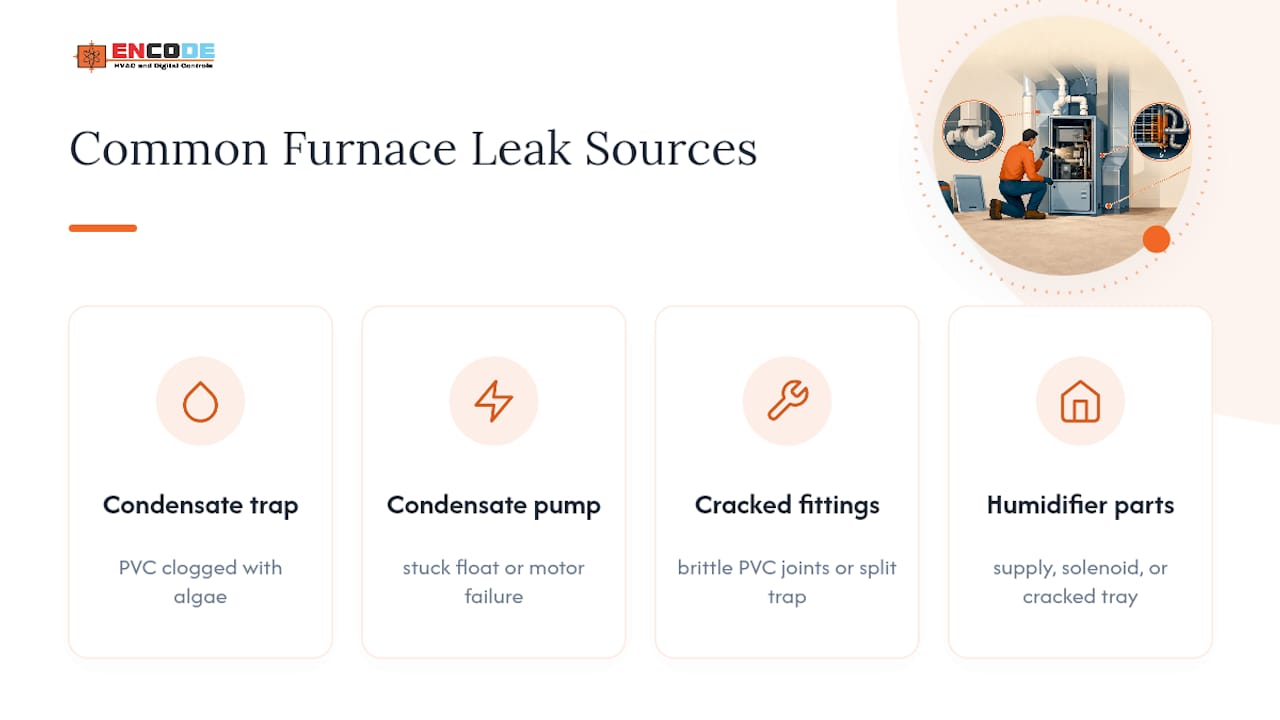
The most common culprit is a clogged condensate drain or trap, which affects any high-efficiency condensing furnace that produces water as a byproduct of combustion. Algae, sediment, and sludge build up in the PVC drain line over a season or two, and once the trap fills faster than it drains, water backs up into the furnace cabinet or drips onto the floor below.
A failed condensate pump is the second most likely cause. These small pumps sit near the furnace and push water uphill to a drain. When the float switch sticks or the motor burns out, water simply overflows the reservoir. There's rarely a dramatic sign. Just a slow, steady puddle that seems to appear overnight.
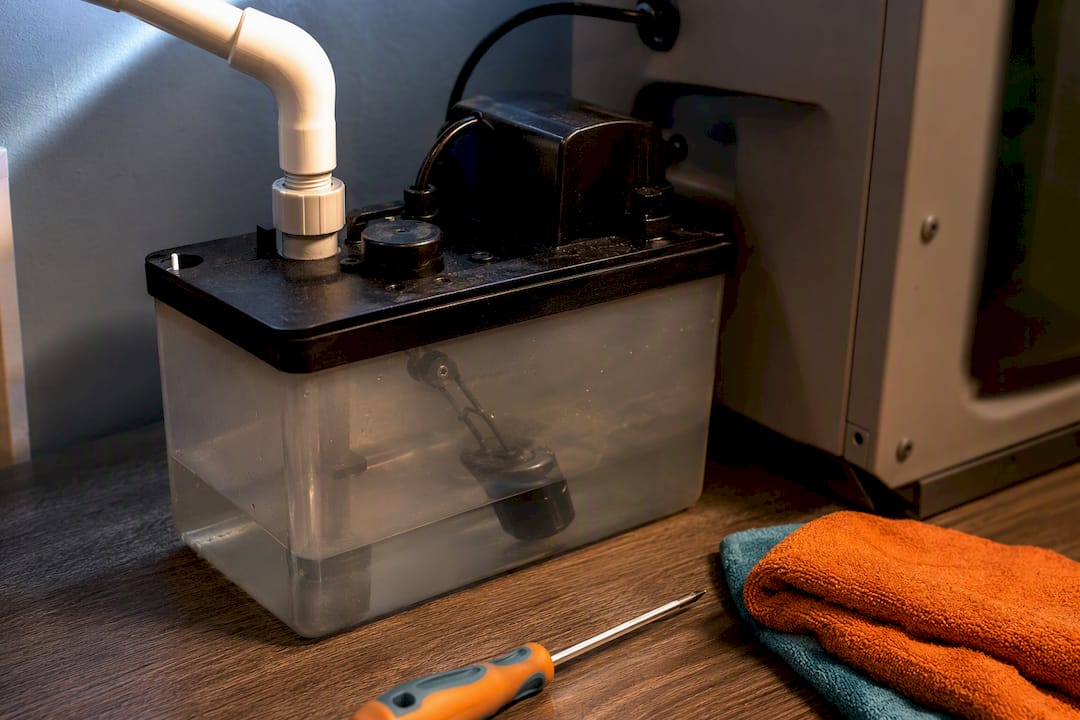
Cracked traps and loose fittings cause leaks too, especially in older installations where PVC joints have shifted or brittle plastic has split from age. If you run a whole-home humidifier, check its supply line, solenoid valve, and tray. A cracked humidifier tray or a stuck solenoid can mimic a furnace leak almost perfectly.
During cooling season, an overflowing evaporator coil drain pan is usually to blame rather than the furnace itself, since the AC's cooling coil sits in the same air handler cabinet. Finally, watch for improper vent pipe slope, which lets condensate collect instead of draining, and frozen condensate lines in unheated spaces like garages or crawl spaces, both of which can force water back into the unit.
What Should I Do the Moment I See Water?
- Cut power to the furnace at the breaker or the switch on the unit if water is anywhere near wiring, the blower motor, or the control board.
- Step outside immediately and call your gas utility if you smell gas. Do not touch switches or use your phone inside.
- Treat any carbon monoxide alarm as a real emergency. Leave the house and call 911 or your fire department.
- Mop up standing water with towels or a wet/dry vacuum, and move nearby boxes, rugs, or furniture off the wet floor.
- Take a few photos before cleanup for your records and, if needed, for a technician or insurance claim.
Pro Tip: Speed matters more than most homeowners realize. Mold can begin growing within 24 to 48 hours after water sits on drywall, subfloor, or carpet padding, so drying the area fast is as important as fixing the leak itself.
Is the Water Coming From the Furnace, AC, or Somewhere Else?
Season is your fastest clue. A leak that only shows up when the air conditioner is running almost always traces back to the AC evaporator coil drain pan or condensate line, not the furnace's heating components. A leak during heating season, especially with a high-efficiency furnace, points toward the condensate drain, trap, or pump.
Run a few quick checks before assuming the worst:
- Turn the whole system off for 30 to 60 minutes. If water keeps appearing, it's likely plumbing, not HVAC.
- Trace the condensate line from the furnace to where it terminates outside or into a drain, watching for kinks or blockages.
- Open the pump reservoir and check the float. A pump that's failed to activate is often the quiet cause behind a slow overflow.
- Inspect the trap for cracks and the humidifier tray and supply line for cracking or mineral buildup.
- Look inside the cabinet itself. Water pooling internally, versus dripping externally near the base, points to very different repairs.
How Do You Fix a Leaking Furnace Yourself?
Many condensate issues are genuinely fixable without a service call, as long as you're comfortable working around a shut-off unit.
- Turn off power to the furnace before touching anything.
- Locate the condensate drain line and disconnect it at the trap. Flush it with a mix of warm water and white vinegar (or a mild bleach solution) to break down algae and sludge, then follow with a wet/dry vacuum on the outside end to pull the clog free.
- Check the condensate pump: confirm it's plugged in and getting power, empty the reservoir, and manually lift the float to see if the pump kicks on. If it doesn't respond, the pump itself likely needs replacing rather than repairing.
- Reseat or replace a cracked trap, checking every joint along the line for looseness.
- If it's AC-related, clean the evaporator drain pan and line the same way, and swap a small cracked pan rather than trying to patch it.
- Replace the air filter. A dirty filter restricts airflow, which can ice the coil and cause overflow once it thaws.
Wear gloves and eye protection when handling bleach solutions, and never force compressed air into a drain port since it can push a clog deeper or damage internal components. If flushing doesn't clear the line or the pump still won't prime, stop there and call a technician.
Pro Tip: Cleaning a condensate line is genuinely DIY territory, but a pump that keeps failing or a heat exchanger fault is not. Know where that line is before you start.
When Should You Call an HVAC Professional?
Some signs mean stop troubleshooting and pick up the phone. Water inside the furnace cabinet itself, visible corrosion, a persistent musty odor, exposed or wet wiring, a furnace that keeps shutting itself down, or a leak that returns right after you've cleaned the drain all point to something beyond a simple clog.
- A cracked secondary heat exchanger is rare but serious, since it carries a carbon monoxide risk and is difficult to detect without combustion analysis and internal inspection.
- Repeated condensate backups can accelerate corrosion inside that same heat exchanger over time.
- Electrical shock risk goes up any time water has reached the blower motor or control board.
Typical repair costs: condensate pump replacement runs roughly $150 to $400, and trap or line repairs $50 to $200; humidifier repairs typically fall between $100 and $350, while a full heat exchanger replacement lands between $1,500 and $3,000 given the labor and safety inspection involved.
Before your appointment, snap photos of the leak, note your furnace's make, model, and age, and pull up the date of its last service if you have it. That alone can shave real time off a diagnostic visit.
How Can You Prevent Future Furnace Water Leaks?
Most leaks are preventable with a schedule most homeowners simply don't keep. A fall furnace tune-up and a spring AC tune-up that both include a condensate-trap cleaning catch problems long before they become puddles on your floor.
- Book a furnace tune-up every fall and an AC tune-up every spring, and ask your technician to check the condensate trap and pump at both visits.
- Replace your air filter every 1 to 3 months. A clogged filter is one of the sneakier paths to a frozen coil and an eventual leak.
- Service your humidifier annually: swap the pad, check the solenoid valve, and look for tray cracks.
- Ask your technician to confirm proper vent pipe slope and test the condensate pump's float switch, since pumps typically last 5 to 10 years before needing replacement.
For a deeper seasonal walkthrough, our guide to getting your furnace ready before Montana winter covers the checks worth doing yourself between professional visits.
What Encode Sees on Real Service Calls
Many local providers have spent decades answering calls just like this one, with most issues turning out to be a clogged drain or a tired pump, not a failing furnace. A typical diagnostic visit includes a safety check for gas and carbon monoxide, a full inspection of the condensate drain and trap, a look at the humidifier if you have one, and a pump test with the reservoir opened and the float manually cycled. Homeowners get a straight answer on what's wrong before any repair starts.
— Daniel
Get Your Leak Diagnosed Before It Gets Worse
Chasing down a condensate clog or a dead pump yourself works fine until it doesn't, and a furnace that keeps leaking after a DIY fix usually means something upstream needs a trained eye. Technicians familiar with furnaces in the Billings area, including older units with brittle PVC traps and newer high-efficiency models, can provide informed service.

Booking a visit gets you a full inspection, an honest diagnosis, and a written estimate before any repair begins, so there are no surprises once the work starts. If you're seeing any of the danger signs from this guide, water inside the cabinet, a burning or musty smell, or a leak that returns after cleaning, that's your cue to stop troubleshooting and call. Our residential HVAC service team handles everything from a quick drain flush to a full furnace repair, and our maintenance plans build the seasonal condensate checks right into your fall and spring visits so this doesn't become a recurring problem. If you'd rather compare quotes first, homeowners can also get competitive bids through BidWolf before deciding who to call.
Sources
- Furnace Leaking Water: 7 Causes & How to Fix Each One | HVAC Base
- HVAC condensation guide | EVstudio
- Why is my furnace leaking water? | Trane
- How fast does mold grow after a water leak? | Gold Coast Flood
FAQ
How Do You Unclog a Furnace Condensate Drain?
Disconnect the line at the trap, flush it with a warm water and vinegar mix or a mild bleach solution, then clear the far end with a wet/dry vacuum. Never force compressed air into the drain port, since it can push the clog deeper.
Why Is There Water Coming Out of the Furnace?
The most common reason is a clogged condensate drain or failed condensate pump on a high-efficiency furnace, though a cracked trap, humidifier leak, or overflowing AC drain pan can cause the same symptom.
Is Fixing a Leaking Furnace Expensive?
It depends on the cause: condensate pump replacement typically runs $150 to $400 and trap or line repairs $50 to $200, while a rare cracked heat exchanger replacement can cost $1,500 to $3,000.
Is It Normal for Water to Come Out of a Furnace?
A small amount of condensate draining properly through the intended line is normal for high-efficiency furnaces. Water pooling on the floor, dripping from the cabinet, or backing up anywhere else is not, and it means something in the drain system needs attention.
When Should I Stop Troubleshooting and Call a Professional?
Call immediately if you smell gas, hear a carbon monoxide alarm, see water inside the furnace cabinet, or notice a leak return right after a DIY fix, since those point toward electrical or heat exchanger risks that need a trained technician.