
Most furnaces blowing cold air have one of two problems: the thermostat fan is set to ON instead of AUTO, or the air filter is clogged enough to trip a safety switch. Fix those first. If burners never light or you smell gas, shut the system down and call your gas utility or emergency services immediately, not an HVAC contractor. Expect warm air within about 60 to 90 seconds of a normal cycle; if cold air persists well beyond this warm-up period, there is likely a mechanical issue.
TL;DR:
- Ensuring the thermostat fan is set to AUTO and replacing a clogged air filter often resolves cold air issues without professional help.
- Deep faults like ignition failure, flame sensor fouling, or high-limit switch trips typically require a technician's diagnosis and repair.
- Gas supply problems, such as a closed shutoff valve or faulty gas valve, can prevent ignition and should be checked before calling for service.
- Persistent cold air after quick fixes usually indicates internal component failures or ductwork leaks, necessitating professional inspection.
- Regular maintenance, including filter changes and annual tune-ups, prevents most causes of furnace cold air and extends system lifespan.
Table of Contents
- Why Is My Furnace Blowing Cold Air? Start Here
- What Causes Deeper Furnace Cold Air Problems?
- When Should You Stop Troubleshooting and Call a Pro?
- How Often Should You Service Your Furnace to Prevent Cold Air?
- Is Your Blower Motor or Blower Wheel the Problem?
- Check the Gas Supply and Valve Before Assuming the Worst
- Could Your Thermostat Location Be Fooling the System?
- What Are Limit Switches Beyond the High-Limit Switch?
- What Encode's Technicians See on Cold-Air Service Calls
- Book a Furnace Repair or Maintenance Visit With Encode
- Sources
- FAQ
Why Is My Furnace Blowing Cold Air? Start Here
A furnace blowing cold air is annoying but not usually catastrophic. A stepwise troubleshooting order, starting with the thermostat and filter before touching anything internal, resolves a large share of cold air service calls without a technician visit. That's the order to follow below.
- Check the thermostat fan mode. Set it to HEAT with the fan on AUTO, not ON. A fan stuck on ON keeps blowing air between heating cycles, and that air feels cold because it's just room temperature air passing over a burner that isn't firing. This single fix is the most common quick resolution homeowners find.
- Bump the setpoint up 3 to 5 degrees and listen for the burners to kick on. This confirms the thermostat is actually calling for heat rather than sitting satisfied.
- Pull the air filter and hold it up to a light. If you can't see light through it, replace it. A MERV 8 to 11 filter works for most residential furnaces; anything higher can restrict airflow unless your blower is rated for it. Filters usually live in a slot near the return duct or inside the blower compartment.
- Walk the house and open every supply and return vent. Furniture, rugs, and curtains block more vents than people realize, and a blocked return can starve the burner of the airflow it needs to stay lit.
- Do a soft reset. Turn the thermostat off, wait 60 seconds, then switch it back to heat. If that doesn't help, flip the furnace's power switch (it looks like a light switch, usually near the unit) off and on, or reset the breaker if the switch doesn't do it.
Give each fix a few minutes to show results before moving to the next one. A furnace that's actually working will have warm air at the nearest vent within 60 to 90 seconds of the burners lighting.
Pro Tip: Write down which step fixed it, even if it seems obvious in the moment. If the same symptom returns in a week, that note tells a technician exactly where to start instead of repeating your entire checklist.
What Causes Deeper Furnace Cold Air Problems?
When the quick fixes don't work, the problem usually lives inside the cabinet, and most of these require a screwdriver, a multimeter, or a trained eye to resolve safely.
- Ignition failure. If you hear the inducer motor spin up but never see or hear a flame, the ignitor may be cracked or the igniter's electrical connection has failed. Hot surface ignitors are common failure points on furnaces over 8 to 10 years old.
- Flame sensor fouling. A furnace that lights, runs for a few seconds, then shuts off is almost always a flame sensor problem. A thin coat of carbon on the sensor rod fools the control board into thinking the flame went out, so it cuts the gas valve. Cleaning the sensor with a fine abrasive pad resolves this in many cases, though sensors that foul repeatedly are often cheaper to replace outright than to keep cleaning every heating season.
- High-limit trips from restricted airflow. A dirty filter doesn't just reduce airflow, it can let the heat exchanger overheat, and the high-limit switch responds by shutting the burners down while the blower keeps running. That's what produces the warm-then-cold cycling pattern homeowners describe as the furnace "running but not heating." Replacing the filter and letting the unit reset usually clears it.
- Condensate or pressure switch faults. High-efficiency furnaces (90%+ AFUE) generate condensate that has to drain properly. A clogged drain line or a stuck pressure switch will stop burner ignition entirely, sometimes with the blower still running cold air.
- Ductwork issues. Disconnected or leaking ducts in a basement or attic can dump heated air before it reaches the rooms you're standing in, which reads as "cold air" even when the furnace itself is working correctly.
A warm-to-cold cycling pattern is far more likely to be an airflow or limit-switch issue than a cracked heat exchanger. Technicians confirm heat exchanger cracks with combustion analyzers, not by feeling vent temperatures, so don't assume the worst-case scenario based on symptoms alone.
When Should You Stop Troubleshooting and Call a Pro?
If you smell gas anywhere near the furnace, stop everything. Leave the house, and call your gas utility or 911 before you call an HVAC contractor. Gas odors are not a DIY diagnostic step.
Beyond that, here's when a technician visit beats continued troubleshooting:
- The furnace locks out repeatedly (shuts down and needs a manual reset more than once in a day).
- You've replaced the filter and reset the system, but the high-limit keeps tripping.
- You suspect a cracked heat exchanger, especially with a burning smell or visible rust and moisture inside the cabinet.
- Breakers keep tripping or you hear buzzing, clicking, or grinding from the blower compartment.
A technician's visit typically starts with a control board diagnostic, then narrows to the flame sensor, ignitor, pressure switch, or gas valve depending on the fault codes. Have your furnace's age, model number, and a rough timeline of the symptoms ready. It cuts diagnostic time significantly.
How Often Should You Service Your Furnace to Prevent Cold Air?
Most of these breakdowns are preventable, and prevention is cheaper than any repair call.
- Replace standard fiberglass filters every 30 to 60 days; pleated filters can stretch to 90 days, but check monthly during peak heating season.
- Schedule an annual tune-up that includes a combustion check, flame sensor inspection, limit switch test, blower inspection, condensate line flush, and thermostat calibration check.
- Keep furniture and rugs at least a few inches off every return and supply vent, and have ductwork inspected if certain rooms run consistently colder than others.
- If a furnace is of advanced age and requires costly repairs compared to replacement, replacement often proves to be the more economical choice.
Pro Tip: Set a phone reminder for filter changes tied to a date you'll actually remember, like the first of the month, rather than "whenever it looks dirty." Filters that appear clean on the front can still be heavily loaded with dust on the intake side.
A pre-season furnace checklist before the first cold snap catches most of these issues while they're still cheap to fix. Homeowners enrolled in a maintenance plan get this done automatically, on schedule, without having to remember it themselves.
Is Your Blower Motor or Blower Wheel the Problem?
The blower motor and blower wheel move heated air from the furnace into your ductwork, and a fault here can mimic a cold-air complaint even when the burners are working fine. Listen for the blower during a heating cycle. If it never starts, or starts and stops erratically, the motor's capacitor may have failed, or the motor itself has burned out.
A dirty blower wheel is a sneakier problem. Dust and debris build up on the wheel's fins over years of operation, and enough buildup unbalances the wheel or reduces the volume of air it can push. The symptom looks like weak, lukewarm airflow rather than fully cold air, since the furnace is heating the air but not moving enough of it through the house fast enough.
You can visually check the blower wheel yourself if you're comfortable removing the furnace's front panel: turn off power at the switch or breaker first, then look for visible dust cakes on the wheel's blades. A light coating is normal. Heavy, matted buildup needs a professional cleaning, since the wheel typically has to come off its shaft to clean thoroughly, and reinstalling it out of balance creates a vibration problem that's worse than the dust was.
If the blower runs constantly, even when no heat call is active, the fan relay or thermostat wiring is likely at fault rather than the motor itself. That's a control issue, not a mechanical one, and it's worth mentioning to a technician exactly which behavior you're seeing.
Check the Gas Supply and Valve Before Assuming the Worst
No gas, no flame, no heat. It sounds obvious, but a surprising number of cold-air calls trace back to something upstream of the furnace entirely. Check that other gas appliances in the house, a water heater or stove, are working. If they're out too, the problem is your gas supply, not your furnace.
Next, confirm the manual shutoff valve on the gas line near the furnace is fully open. These valves get bumped during other work in the utility area more often than you'd think, and a valve that's even partially closed can starve the burners enough to prevent stable ignition.
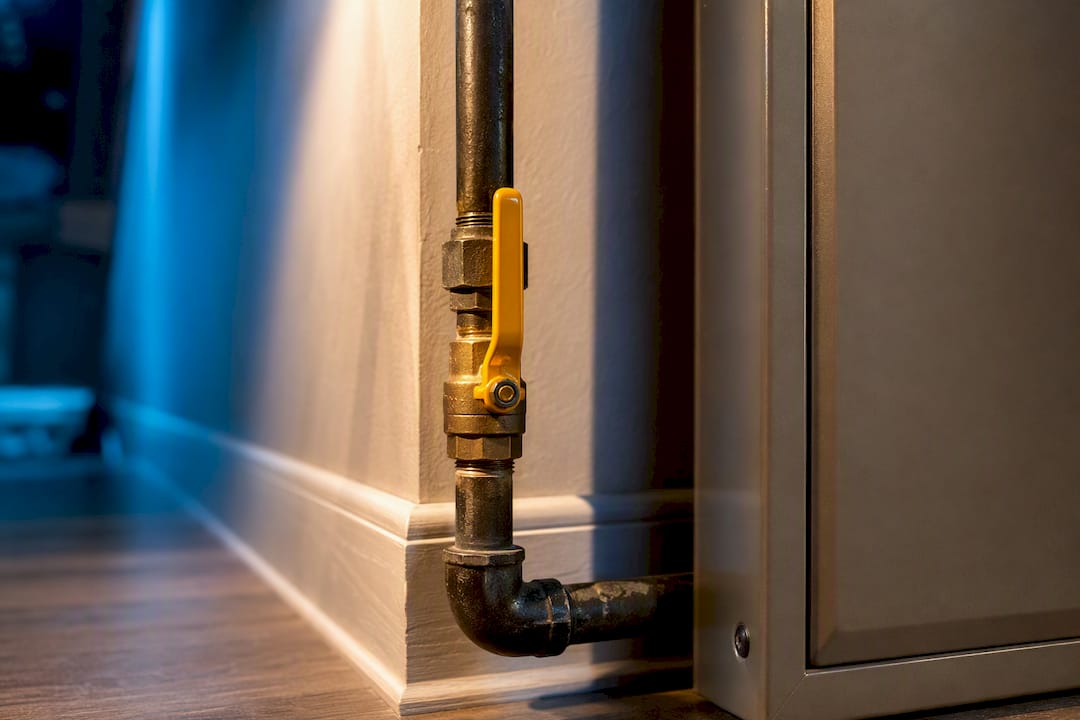
The gas valve on the furnace itself, the component that meters gas to the burners on command from the control board, is not something to test or adjust yourself. If the valve is stuck, miswired, or failing electrically, it needs a technician with a multimeter and manufacturer specs, not a guess-and-check approach. A gas valve that clicks but doesn't open, or opens without a spark or hot surface ignitor firing at the same time, points to a control board or ignition timing fault rather than the valve itself.
If you've confirmed gas is flowing to the house and the shutoff valve is open, but the furnace still won't ignite, that's your signal to stop testing components and call a professional. Anything downstream of the manual shutoff valve on a gas furnace crosses from homeowner territory into licensed technician territory.
Could Your Thermostat Location Be Fooling the System?
A thermostat mounted in the wrong spot will report a temperature that has nothing to do with how the rest of your house actually feels. Thermostats near a drafty exterior door, in direct sunlight, above a heat register, or on an exterior wall all read inaccurately, and an inaccurate reading means the furnace shuts off before the house is actually warm, or runs longer than it needs to.
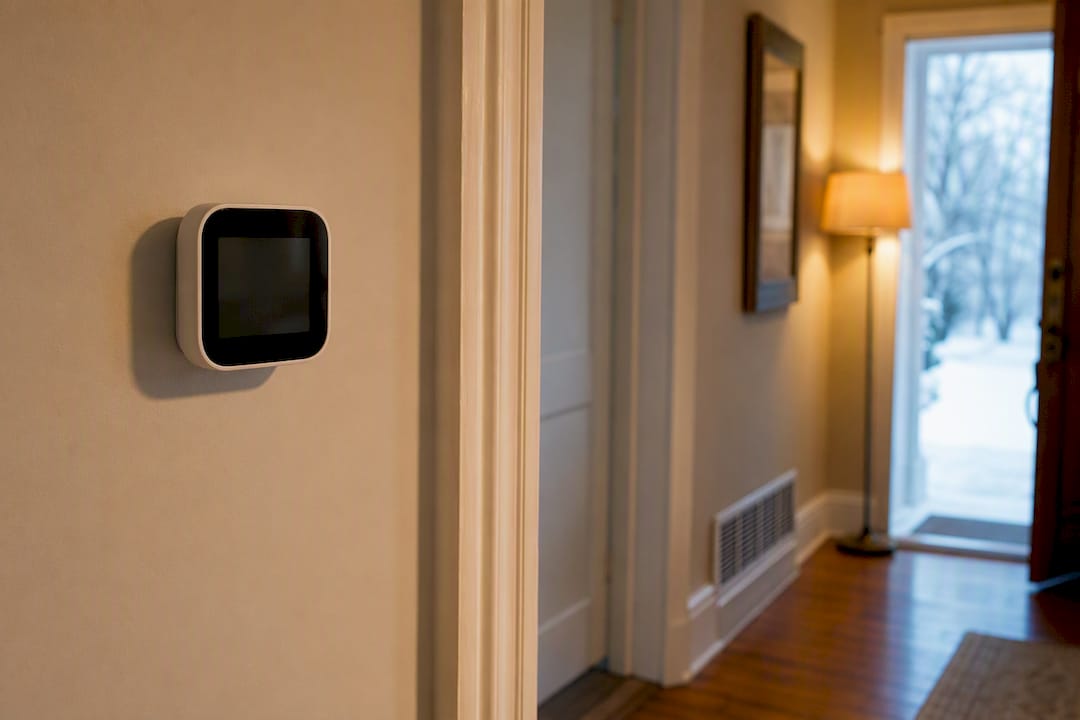
Calibration drift is a separate, quieter problem. Older mechanical and even some digital thermostats can drift a few degrees off true over years of use. If a thermostat reads 70 degrees but a separate room thermometer says 66, that gap is calibration error, and it explains a furnace that seems to run fine but never quite gets the house comfortable. Most smart thermostats let you enter a calibration offset in the settings menu to correct this without replacing the unit.
Placement problems are harder to fix without moving the thermostat, but you can often work around minor issues by relocating a lamp or space heater that's warming the wall behind it, or by closing a nearby vent that's blasting the sensor directly. If your home has persistent room-to-room temperature swings and the thermostat is the only measurement point the system uses, an automation or controls upgrade that adds zone sensing can solve a problem that no amount of furnace troubleshooting ever will.
What Are Limit Switches Beyond the High-Limit Switch?
The high-limit switch gets most of the attention because it's the one that trips from a dirty filter, but it isn't the only safety switch standing between your furnace and a heating cycle. A rollout switch detects flames escaping the burner compartment instead of traveling normally into the heat exchanger, a condition called flame rollout, and it shuts the whole system down immediately when triggered. Rollout typically points to a blocked flue, a cracked heat exchanger, or improper burner adjustment, not something to reset and ignore.
There's also often a secondary limit switch tied specifically to the blower compartment or the plenum, distinct from the primary high-limit on the heat exchanger itself. These exist because different parts of the furnace can overheat independently, and a single sensor wouldn't catch every failure mode.
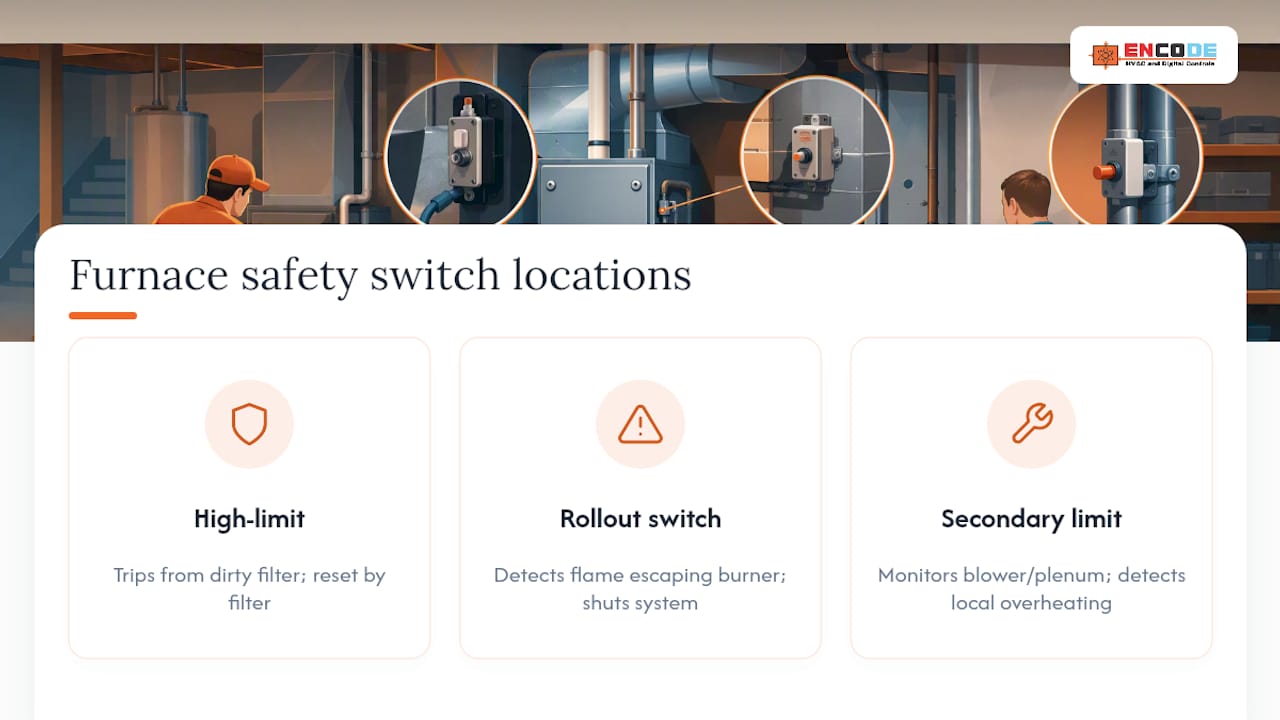
Here's the practical distinction for a homeowner: a high-limit trip from a dirty filter is a nuisance you can often clear yourself by replacing the filter and letting the unit reset. A rollout switch trip is a safety event that shouldn't be reset repeatedly without a technician finding out why it tripped in the first place. If your furnace's reset button won't hold, or it trips again within minutes of resetting, that pattern points toward a rollout or secondary limit switch rather than the simple airflow-driven high-limit problem covered earlier. Don't keep pressing reset on that kind of repeated failure. It's exactly the pattern that turns a $150 sensor cleaning into a much larger repair if ignored.
What Encode's Technicians See on Cold-Air Service Calls
Technicians often resolve a meaningful share of cold-air calls on the first visit with simple fixes like a thermostat adjustment or filter swap, consistent with industry-wide patterns. On every diagnostic visit, we still run the full sequence: thermostat mode, filter condition, vent obstructions, then ignition and flame sensor behavior, because skipping steps just means missing the actual cause.
If you're expecting a visit, having your thermostat model, furnace age, and a rough description of when the cold air started ready for the technician cuts diagnostic time noticeably. It also helps to leave the thermostat at its normal setting rather than cranking it before we arrive, since that preserves the actual symptom pattern we need to see.
— Daniel
Book a Furnace Repair or Maintenance Visit With Encode
If you've run through the thermostat, filter, and vent checks in Billings and the furnace is still blowing cold air, that's the point where a technician's diagnostic tools beat further guesswork, and it's also where most homeowners lose time trying one more YouTube fix instead of just calling. A full range of services is available, including same-day diagnostics, flame sensor and ignitor replacement, condensate line clearing, gas valve inspection, and furnace replacement when repairs are uneconomical.
A quick DIY check is worth trying first when the fix is a filter or a thermostat setting. Once you're into ignition faults, repeated lockouts, or anything involving the gas valve, that's a job for a licensed technician with the right test equipment, not a second trip to the hardware store. Our residential HVAC service covers exactly this kind of diagnostic and repair work across Billings, and enrolling in a maintenance plan means an annual tune-up catches flame sensor fouling and limit switch wear before either one leaves you without heat on a cold morning. Call to schedule a diagnostic visit, or book a maintenance plan online to get ahead of the next cold snap.
Sources
- What to Do When Your Furnace Blows Cold Air: Complete Troubleshooting Guide | HVAC Laboratory
- Why Is My Furnace Blowing Cold Air? | Bryant
- How to Fix a Furnace Blowing Cold Air Fast - Prime Heating & Cooling LLC
- Heater blowing cold air? Causes, fixes & costs (J Martin)
FAQ
Should I Turn My Furnace Off If It's Blowing Cold Air?
Not necessarily. If there's no gas smell and no burning odor, leave it running while you check the thermostat fan setting and filter, since those fixes require the system on to test. Turn it off immediately, though, if you smell gas, hear unusual grinding, or see error codes flashing repeatedly.
How Do I Reset My Furnace?
Turn the thermostat off, wait about 60 seconds, then switch it back to heat. If that doesn't restart normal operation, flip the furnace's power switch or the breaker off and on, then wait for the full ignition sequence to complete.
Why Is Cold Air Blowing When the Heat Is On?
The most common cause is the thermostat fan set to ON instead of AUTO, which keeps air moving between heating cycles. A close second is a clogged filter that's tripped the high-limit switch and shut the burners off while the blower keeps running.
What Are the Signs of a Dying Furnace?
Repeated lockouts, rising repair frequency, uneven heating between rooms, unusual odors, and advanced age are the clearest warning signs. If a needed repair costs more than roughly a third of a replacement furnace, replacement is typically the better financial move.