
Most leaks are not a call-911 emergency, but they are never a wait-and-see situation either. If you can safely reach the switch, turn off power to the boiler and shut off its water supply, then keep everyone away from the unit. A licensed technician should look at anything beyond a simple drip within a day.
TL;DR:
- Leaks caused by overpressure or a failing relief valve often produce slow drips, especially if the system pressure exceeds safe ranges, requiring part replacement.
- Visible leaks from fittings or pipes may be due to worn seals or loose connections, but internal cracks or corrosion in the heat exchanger are more serious and usually necessitate professional repair or replacement.
- Immediate actions include shutting off power, containing water, and photographing the leak, but work inside the boiler should only be performed by licensed technicians due to safety hazards.
- Common DIY checks involve inspecting system pressure, bleeding radiators, and examining the condensate pipe for blockages or ice, which can sometimes resolve minor leaks.
- Signs warranting urgent professional attention include pooling water near electrical components, rapidly growing leaks, persistent pressure drops, or error codes indicating system issues, often involving higher repair costs or boiler replacement.
Table of Contents
- Why Is My Boiler Leaking Water? Common Causes
- What to Do the Moment You Spot a Leak
- Simple Checks You Can Safely Do Yourself
- When to Call a Professional (and What It Costs)
- Preventing the Next Leak Before It Starts
- How to Trace the Leak Before the Technician Arrives
- Temporary Fixes That Buy You Time
- Get Your Boiler Leak Fixed Fast with Encode HVAC and Digital Controls
- Sources
- FAQ
Why Is My Boiler Leaking Water? Common Causes
Water showing up around your boiler almost always traces back to one of a handful of usual suspects. Pinning down which one you're dealing with saves time and, often, money.
- High system pressure or a failing pressure relief valve. When pressure climbs too high, the valve does its job and discharges water, sometimes as a slow weep and sometimes as a steady dribble. Corroded seals and worn valves in older systems are common culprits, and once a valve starts leaking under normal pressure, it usually needs replacing rather than tightening.
- Loose fittings or worn seals on visible pipework. Compression joints and unions shift slightly over years of heating cycles, and the rubber or fiber seals inside them dry out and crack.
- Condensate pipe blockages or freezing. Condensing boilers push acidic condensate through a plastic drain pipe, and if that pipe freezes in cold weather or clogs with sludge, the backup has nowhere to go but out.
- Corrosion or cracks in the heat exchanger. This is the least common cause but the most serious, since it usually means internal component failure rather than a simple part swap.
One wrinkle worth knowing: water tracks. A drip you spot near the floor might have traveled down a pipe from a joint several feet away, so the visible puddle and the actual leak point are often two different places.
What to Do the Moment You Spot a Leak
Your first few minutes matter more for damage control than for diagnosis. Work through this in order:
- Turn the boiler off using its own control panel or power switch.
- If you can do it without touching anything wet, isolate power at the fused spur or your home's consumer unit.
- Keep kids and pets well clear of the unit and any puddled water.
- Lay towels or position a bucket to contain the water and protect flooring, baseboards, and nearby belongings.
- Take a photo of the leak location and write down any error code on the display.
- Leave the outer casing alone. Don't attempt to open it or look inside.
Wet electrical components near a gas appliance are a real hazard, which is exactly why step two comes with a condition. If reaching the panel means stepping through standing water or touching a damp switch, skip it and just get everyone out of the room.
Pro Tip: Snap that photo before you mop up. A technician diagnosing your leak over the phone can often narrow down the cause just from seeing where the water is pooling and which fittings look wet.
Simple Checks You Can Safely Do Yourself
Before you pick up the phone, a few low-risk checks can either solve the problem outright or give your technician a massive head start.
- Check the pressure gauge. Most residential boilers run safely within a normal pressure range when cold. If the pressure gauge shows a reading well above this normal range, it may indicate overpressure rather than a mechanical failure.
- Bleed a radiator if pressure reads high. Releasing a small amount of trapped air can bring pressure down and stop a relief valve from discharging. Recurring pressure top-ups are a different story and usually point to a persistent leak or a failing expansion vessel rather than trapped air.
- Inspect the condensate pipe, inside and out. Look for kinks, ice in cold weather, or a visible clog where it exits the house.
- Check visible joints and valve unions for dampness. Gently dry them with a cloth, wait a few minutes, and see if moisture returns. A joint that stays dry after wiping often just needs a light re-tightening, which is a job for your technician but a useful data point.
Here's a number worth remembering: a boiler running even slightly above its safe pressure range will keep discharging water through the relief valve indefinitely, drip by drip, until someone corrects the pressure or replaces the valve. It won't fix itself by sitting there.
What to skip entirely: removing the front casing, poking at internal wiring, or attempting any gas line work. Those are licensed-technician-only tasks, full stop.
When to Call a Professional (and What It Costs)
Some signs mean you stop troubleshooting and pick up the phone immediately. Watch for:
- Water reaching or pooling near electrical components or outlets.
- A leak that's growing quickly rather than staying at a slow drip.
- Pressure that keeps dropping even after you've topped it up more than once.
- Any error code related to leaks, pressure, or ignition lockouts.
- A visible pool of water underneath the unit itself, which often signals internal component failure.
Any of these situations calls for urgent professional attention rather than continued DIY diagnosis. A technician's first visit typically involves a diagnostic fee, then a quote for parts and labor once the cause is confirmed. Minor repairs like a valve replacement or a re-sealed joint tend to sit at the lower end of the cost range. A cracked heat exchanger or other major internal component is a different conversation, sometimes tipping the scale toward replacing the boiler entirely rather than repairing it. Attempting internal repairs yourself on a gas appliance isn't just unwise, it's genuinely unsafe, so budget for a licensed visit rather than a weekend project.
Preventing the Next Leak Before It Starts
Most leak calls that Encode HVAC and Digital Controls handles trace back to a maintenance gap that showed warning signs months earlier. A few habits can close that gap:
- Book annual professional servicing. A trained technician tests the pressure relief valve, checks the expansion vessel, and inspects seals before they fail outright.
- Protect the condensate run. Insulating exposed pipe sections and routing them to avoid low spots that collect water cuts down on winter freezing.
- Treat your system water. Inhibitors and magnetic filters reduce corrosion and sludge buildup inside the system, which extends the life of internal components.
- Watch for repeat pressure top-ups. If you're adding water to the system every few weeks, something is leaking somewhere, even if you can't see it yet.
Pro Tip: A yearly service visit costs far less than replacing a heat exchanger that corroded quietly for two years. A residential maintenance plan turns that yearly check into a scheduled habit instead of something you forget until the boiler tells you.
How to Trace the Leak Before the Technician Arrives
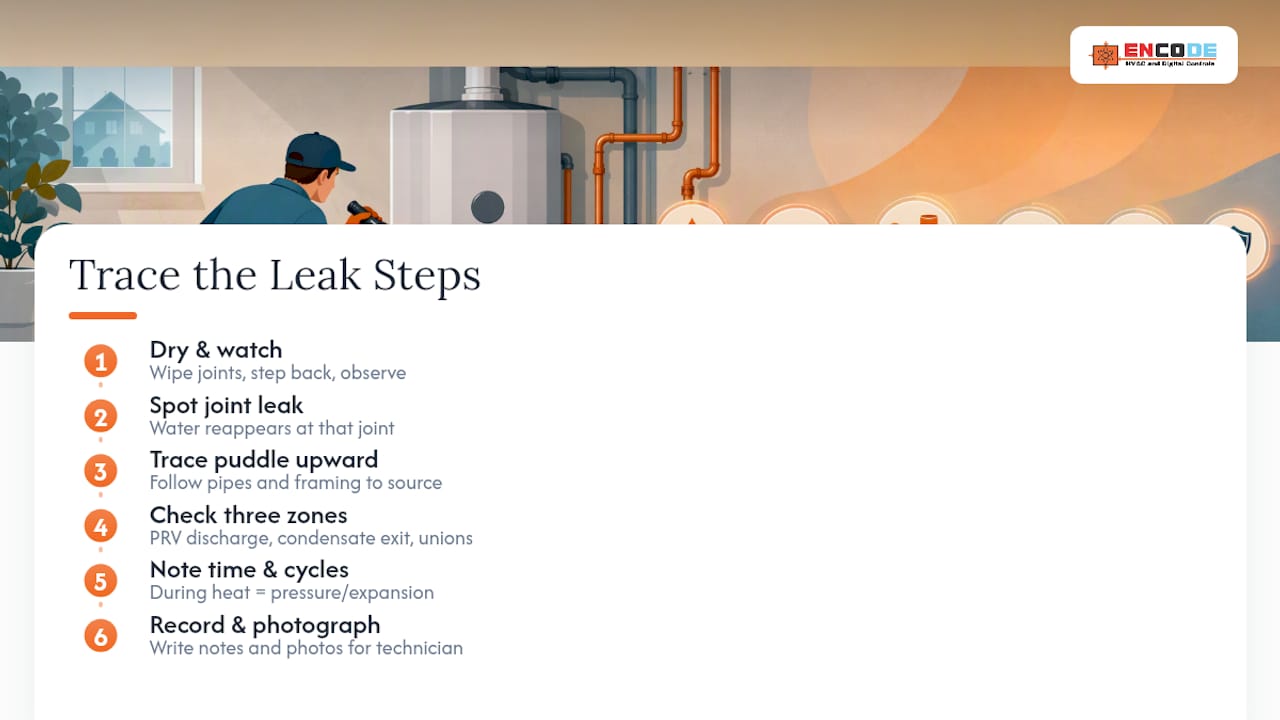
Finding the exact source, or at least narrowing it down, makes the service call faster and often cheaper. Start dry: wipe down every visible pipe joint, valve, and connection near the boiler with a clean cloth, then step back and watch.
Water that reappears at a specific joint within a few minutes points to that connection. Water that shows up lower on the floor, away from any obvious joint, likely traveled there from somewhere higher up. Trace the path upward along pipe runs and framing before assuming the puddle marks the true source.
Check three zones specifically: the pressure relief valve discharge pipe, which usually runs to an outside wall or floor drain; the condensate pipe exit point; and any union fittings on the pipes entering and leaving the boiler. Note the time of day the leak appears too. A leak that only shows up during heating cycles suggests pressure or thermal expansion, while one that's constant points more toward a worn seal or crack.
Write down everything you find and photograph each spot. When you call for service, that information lets the technician bring the right parts on the first visit instead of diagnosing on-site and returning later. Property managers dealing with multiple units benefit especially here. A facility team that documents leaks methodically tends to resolve mechanical issues faster and avoid repeat emergency calls, the same principle that applies whether the fixture in question is a boiler or a backflow preventer.
Temporary Fixes That Buy You Time
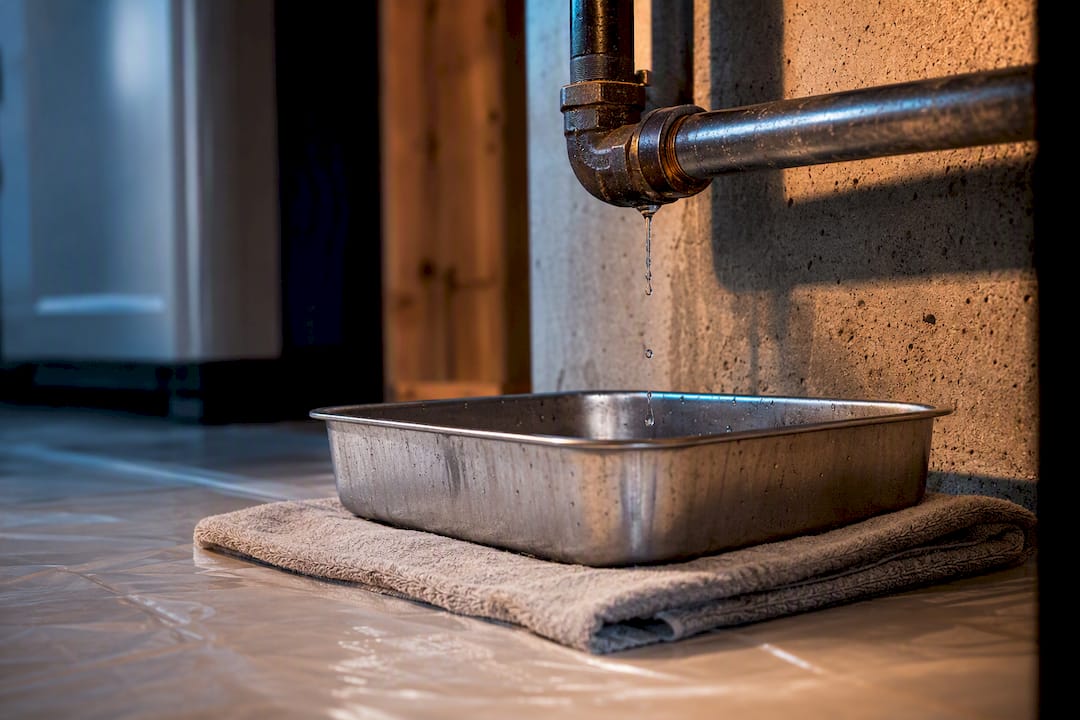
None of these stop the leak permanently, but they slow the damage while you wait for a technician. Start with containment: towels, a shallow bin, or a baking sheet placed directly under the drip point catches water before it spreads across flooring.
If the leak is coming from a threaded joint you can safely access, and the boiler is fully powered down, gently hand-tightening a compression nut a quarter turn sometimes reduces the flow. Don't force it. Overtightening can crack a fitting and turn a slow drip into a real problem. For condensate pipe leaks, a temporary wrap of self-fusing silicone tape around a small crack can hold until replacement.
Move anything valuable, electronic, or made of untreated wood out of the splash zone. If the boiler sits on a finished floor, slide a moisture barrier, even a folded tarp, underneath the containment vessel to protect subflooring from slow seepage you might not notice right away.
Keep a log of how much water accumulates per hour. That detail helps a technician judge urgency over the phone and decide whether you need same-day service or whether the appointment can wait a day. None of these steps replace a proper repair. Think of them as damage control, not a fix, and treat the underlying leak as unresolved until a professional confirms otherwise.
Get Your Boiler Leak Fixed Fast with Encode HVAC and Digital Controls
A leaking boiler doesn't wait for a convenient afternoon, and neither should your repair. Trusted local HVAC providers respond quickly, sending licensed technicians who diagnose the real cause instead of guessing at parts. Our team handles everything from a simple pressure relief valve swap to a full boiler repair or replacement, backed by decades of local heating experience.

Before your technician arrives, gather what you can: the photos you took of the leak, any error code from the display, and clear access to the boiler area so nothing slows down the inspection. That prep alone often shaves real time off a service visit.
If this isn't your first leak, or if you're tired of scheduling emergency visits every heating season, look into our residential HVAC maintenance plans. Regular inspections catch failing valves and worn seals before they turn into a puddle on your floor. Call Encode HVAC and Digital Controls today to book a diagnostic visit or ask about a maintenance plan built around your system.
Sources
This article draws on guidance from Viessmann's boiler leak guide for pressure and corrosion causes, HVAC.com for condensate issues, John Betlem Heating & Cooling for red-flag identification, and CPSC safety notices for appliance safety standards.
- Boiler leaking water? — Viessmann US
- Hvac
- Why Is My Boiler Leaking Water? — John Betlem Heating & Cooling
- CPSC recall and safety notices (example of consumer safety actions)
FAQ
What should I do if my boiler is leaking water?
Turn the boiler off, isolate power if you can safely reach the switch, and contain the water with towels or a bucket. Photograph the leak and any error codes, then call a licensed technician such as Encode HVAC and Digital Controls if the leak continues or grows.
Is a dripping boiler an emergency?
A slow, steady drip usually isn't an emergency, but it does need attention within a day or two since leaks rarely resolve on their own and can accelerate corrosion. It becomes urgent immediately if water reaches electrical components, pressure keeps dropping, or you see pooling under the unit.
How much does it cost to fix a boiler leak?
Costs vary by cause: a minor valve or joint repair typically involves a diagnostic fee plus modest parts and labor, while a failed heat exchanger can push toward full replacement territory. Current pricing for boiler repair and replacement is available directly from Encode HVAC and Digital Controls.
Why is my water boiler leaking from the bottom?
Leaks that appear at the bottom of the unit often trace back to a failing pressure relief valve, a cracked heat exchanger, or water tracking down internal pipework from a joint higher up. A visible pool under the boiler is one of the clearer signs that professional diagnosis is needed rather than a DIY fix.