
AC short cycling is when your air conditioner turns on, runs briefly, and shuts off again in a repeating loop, instead of completing a normal cooling cycle. Check the filter and thermostat first; those two spots cause a large share of cases. But if you smell burning or see ice on the indoor coil, shut the system off at the thermostat and call a technician before doing anything else.
TL;DR:
- Shorter AC cycles below 5 to 10 minutes regardless of outdoor temperature often indicate a problem requiring attention.
- Common causes include restricted airflow, thermostat issues, refrigerant leaks, frozen coils, and an oversized system.
- Regular maintenance such as filter replacement and coil cleaning prevents most short-cycling issues before they escalate.
- Immediate professional help is necessary if there are signs of electrical faults, burning smells, or if a compressor fails to start.
- Monitoring cycle times and keeping a detailed log can quickly aid technicians in diagnosing the underlying cause.
Table of Contents
- What Counts as Normal vs. Problem AC Cycling?
- What Causes AC Short Cycling?
- How Do You Troubleshoot AC Short Cycling Yourself?
- What Happens If You Ignore Short Cycling?
- How Do You Prevent Short Cycling Going Forward?
- When Should You Call an HVAC Technician?
- What Do Professionals Actually Check for Short Cycling?
- How Encode Corporation Can Help With Short Cycling
- Sources
What Counts as Normal vs. Problem AC Cycling?
A healthy central air conditioner typically runs for 10 to 20 minutes per cycle before shutting off, then stays off for a similar stretch until the house warms back up. On a mild spring day, a properly sized system might only run 3 to 5 minutes, and that's fine. Most technicians start getting suspicious when cycles drop below 5 to 10 minutes consistently, especially on hot afternoons when the unit should be working harder, not less.
Here's a quick way to check your own system:
- Set a timer the next time the AC kicks on and note how long it runs before shutting off.
- Time the "off" period too; a unit cycling every 2 to 4 minutes all day, regardless of outdoor temperature, has a real problem.
- Repeat this over two or three days, since a one-time short cycle during a cool evening isn't the same as a pattern.
If the pattern holds steady even as the thermostat setting and outdoor temperature change, you're not dealing with normal variation. You're dealing with AC short cycling.
What Causes AC Short Cycling?
Most short-cycling problems trace back to one of seven areas, and they roughly fall in order from "cheap fix" to "call a pro now."
- Airflow restriction. A clogged filter, closed vents, or a blocked return duct starves the system of air, causing it to overheat internally and shut off as a protective measure.
- Thermostat malfunction. A thermostat mounted in direct sunlight, near a supply register, or with dead batteries reads the room temperature wrong and tells the system to stop too soon.
- Low refrigerant from a leak. Refrigerant loss drops system pressure below a safety threshold, which trips an automatic cutout switch designed to protect the compressor.
- Frozen evaporator coil. Reduced airflow or low refrigerant lets ice build up on the coil, which then triggers a safety shutdown until the ice melts.
- Failing capacitor or contactor. These electrical components help start and sustain the compressor motor; a weak capacitor can cause the unit to start, stall, and restart repeatedly.
- Blocked or fouled outdoor condenser. Grass clippings, leaves, or hail damage around the outdoor unit trap heat the system needs to release, forcing it to shut down early.
- An oversized system. A unit that's simply too big for the square footage cools the space fast and shuts off constantly, even when every part is working correctly (source).
Here's the number that surprises most homeowners: technicians report that basic maintenance issues like dirty filters and blocked condensers resolve a large share of short-cycling service calls, before a wrench ever touches a refrigerant line. Start with the cheap stuff.
How Do You Troubleshoot AC Short Cycling Yourself?
Work through these steps in order. Stop the moment you hit a safety flag.
- Time three or four cycles and jot down run length, off length, and what the thermostat reads versus how the house actually feels.
- Pull the filter and hold it to a light. If you can't see light through it, replace it. Check that furniture or curtains aren't blocking supply vents or the return grille.
- Walk outside and look at the condenser. Clear grass, leaves, and debris by hand, and make sure there's at least two feet of open space around the unit. Don't open the cabinet or touch any wiring.
- Check the thermostat. Swap the batteries, confirm it isn't in direct sun or next to a heat source, and make sure the setting matches what you actually want.
- Look at the indoor coil area for ice. If you see frost or ice anywhere on the coil or refrigerant lines, turn the compressor off but leave the indoor fan running to help it thaw, then call a technician.
- Stop immediately if you smell anything electrical or burning, if a breaker trips more than once, or if the outdoor unit hums but the fan doesn't spin. Those point to electrical faults that aren't a DIY job.
Pro Tip: Keep a simple log on your phone, one line per cycle with date, run time, and outdoor temperature. When you do call a technician, that log cuts diagnostic time significantly because it rules out a dozen questions before the truck even leaves the shop.
What Happens If You Ignore Short Cycling?
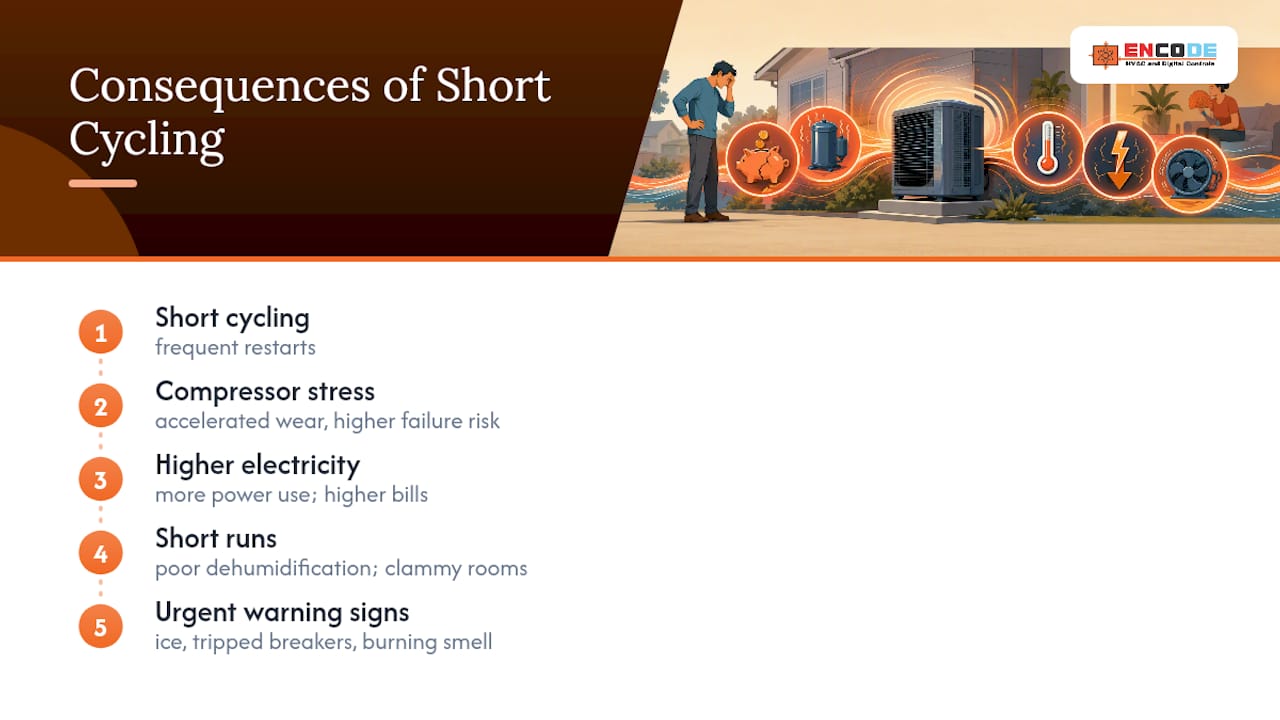
Every extra start puts a small jolt of electrical and mechanical stress on the compressor, the most expensive component in the entire system. Repeated short cycling accelerates wear on that part and raises the odds of a costly compressor failure well before it should have worn out.
Short runs also mean the system never gets long enough to properly pull moisture out of the air, so your house can feel cool but clammy even at the right temperature. Add in higher electricity use from constant restarts, and a small annoyance turns into a bigger utility bill and a shorter equipment lifespan. Mild cycling variation on a cool day can wait for a scheduled appointment. Ice on the coil, tripped breakers, or a burning smell cannot.
How Do You Prevent Short Cycling Going Forward?
Most prevention comes down to keeping air moving freely and catching small failures before they cascade.
- Replace a standard filter every 60 to 90 days, or monthly if you have pets, and choose a moderate MERV rating rather than the highest one, which can restrict airflow on a residential system.
- Book a spring tune-up that includes capacitor testing, refrigerant pressure checks, and condenser coil cleaning, since catching a weak capacitor or a slow leak early is far cheaper than replacing a compressor later.
- Mount thermostats on interior walls, away from windows, vents, and lamps; a smart thermostat adds cycle-length data that makes future troubleshooting faster.
- Keep two feet of clearance around the outdoor unit and trim back shrubs at least once a season.
- Consider a maintenance plan if you'd rather have a technician catch these issues on a schedule instead of waiting for a breakdown.
When Should You Call an HVAC Technician?
Call sooner rather than later if you notice oily residue near refrigerant lines, hear the outdoor unit humming without the fan turning, or the compressor won't start at all. Those symptoms point to leaks or electrical faults that need proper gauges and testing equipment, not guesswork.
Cost expectations vary widely by cause, and knowing the range helps you evaluate a quote instead of just trusting a number:
| Repair | Typical Cost Range |
|---|---|
| Filter or thermostat batteries | $10 to $30 |
| Capacitor replacement | $100 to $350 |
| Contactor replacement | $200 to $400 |
| Refrigerant leak repair and recharge | $200 to $500 |
| Coil or compressor repair | around $1,000 or more |
A proper diagnostic visit should include a full cycle observation, refrigerant pressure readings, an electrical component check, and a look at the outdoor coil, not just a filter swap and a shrug. Ask the technician what specifically caused the short cycling, not just what part they replaced. A maintenance plan that catches capacitor wear or refrigerant loss early usually costs less over several years than paying for emergency compressor repairs after the fact.
What Do Professionals Actually Check for Short Cycling?
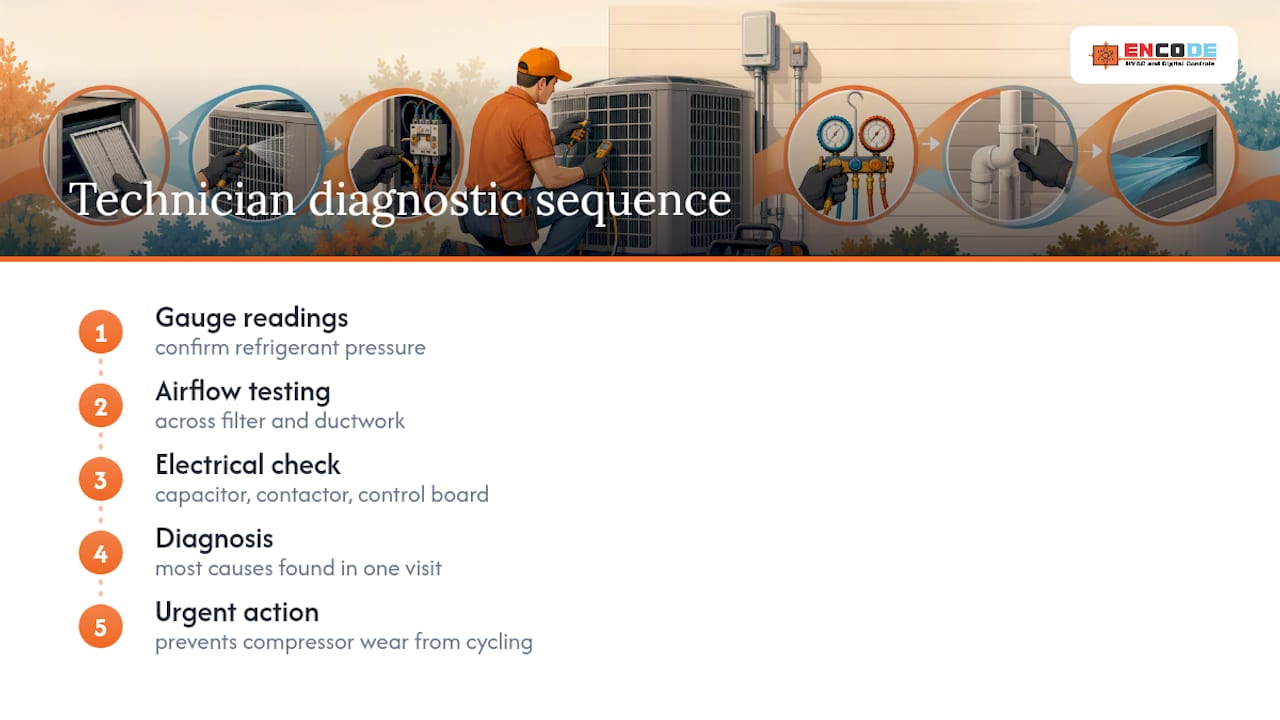
Technicians typically run a diagnostic sequence on every short-cycling call: gauge readings to confirm refrigerant pressure, airflow testing across the filter and ductwork, and an electrical check on the capacitor, contactor, and control board. That sequence usually finds the cause in one visit rather than a string of guesses.
Rapid response matters here because a system stuck in a short-cycling loop is actively wearing down its own compressor with every hour it runs unaddressed.
— Daniel
How Encode Corporation Can Help With Short Cycling
If you've timed the cycles, checked the filter, and the system is still turning on and off every few minutes, it's time for a professional look. Professional HVAC services handle residential air conditioner repair, diagnostic visits, and ongoing controls troubleshooting, with estimates explained before any work starts.

Encode Corporation's residential air conditioning service covers everything from a quick capacitor swap to a full refrigerant leak diagnosis, and the maintenance plan option catches the small failures, weak capacitors, dirty condensers, drifting thermostats, before they turn into a short-cycling pattern. If your ducts might be part of the airflow problem, a duct inspection is worth pairing with the visit. Schedule a diagnostic appointment now and get a straight answer on what's actually causing the cycling, along with a real cost estimate before any repair begins.
Sources
- What Is AC Short Cycling? Causes & Troubleshooting | Carrier
- HVAC short cycling: causes and solutions | Trane
- AC short cycling - causes, diagnosis, repair | InspectApedia