
Check your filter monthly, prep the system each season, and book one professional tune-up every spring. That's the core ac maintenance schedule most homeowners need to run an air conditioner efficiently and avoid the mid-July "no cold air" emergency call. ENERGY STAR notes that skipped maintenance is a primary driver of premature compressor failure, higher utility bills, and shortened equipment life.
TL;DR:
- Homeowners should inspect or replace filters monthly, especially if they have pets or allergies, and hold filters up to light to check for dirt blocking airflow.
- Schedule a professional AC tune-up in early spring, ideally in March or April, to prevent system failures during peak summer use.
- Check the outdoor coil, refrigerant lines, and clear debris at the end of each cooling season in September to maintain efficiency and avoid costly repairs.
- DIY tasks such as clearing debris and inspecting vents are safe, but refrigerant handling or electrical work must be performed by licensed technicians to avoid voiding warranties and legal issues.
- Keeping a detailed maintenance log and booking annual professional service help ensure system reliability, predict costs, and secure priority scheduling during busy seasons.
Table of Contents
- Your AC Maintenance Schedule at a Glance
- How Often Should You Check the Air Filter?
- What Should You Do Each Season?
- What's Included in an Annual Professional AC Tune-Up?
- Which AC Tasks Are Safe for DIY, and When Should You Call a Pro?
- Printable Checklist: Save This for Your Records
- Why 40 Years of Local HVAC Experience Changes the Maintenance Math
- A Technician's Honest Take on Why Homeowners Skip Maintenance
- Book Your Spring Tune-Up Before the Rush
- Sources
- FAQ
Your AC Maintenance Schedule at a Glance
Here's the whole routine broken into three cadences. Pin this to the fridge or save it to your phone.
- Monthly (DIY): Inspect the air filter, hold it to light, replace if you can't see through it.
- Spring (Pro + DIY): Book a professional tune-up in March or April, before the first hot week hits. Clear debris around the outdoor unit yourself.
- Summer (DIY): Glance at run cycles weekly, watch for uneven cooling or water near the indoor unit.
- End of season (DIY): Wipe down the outdoor coil, check exposed refrigerant lines for damage, log anything odd for next spring's visit.
- Fall (Pro, if applicable): Schedule heat-mode service for heat pumps or a furnace check if your system handles heating too.
The two months that matter most for booking a technician are March and April for cooling, and September through October if your system also heats your home.
How Often Should You Check the Air Filter?
A standard 1 inch filter needs a look every one to three months. That's not a rounding error, it's the difference between a system that breathes easy and one that's straining against a clogged mat of dust and pet hair. ENERGY STAR recommends inspecting or replacing filters monthly, and that's the safer default if you haven't settled into a rhythm yet. Thicker media filters, the kind installed in a dedicated cabinet rather than a slot, often last 6 to 12 months, but don't just trust the box. Hold it up to a light. If daylight struggles to get through, it's done its job and needs to go.
Beyond the filter, a few 30 second checks each month catch problems early:
- Confirm supply vents and return grilles aren't blocked by furniture or curtains.
- Swap thermostat batteries at the first sign of a dim display or delayed response.
- Listen for new rattles, squeals, or clicking during startup and shutdown.
- Look at the area around the indoor unit for any dampness suggesting a condensate issue.
Households with shedding pets, a smoker, nearby construction, or heavy spring pollen should check filters closer to the one month mark. Dust load, not the calendar, is the real trigger.
Pro Tip: Write the install date on the filter frame with a marker. It takes five seconds and ends the guessing game about whether you swapped it three weeks ago or three months ago.
What Should You Do Each Season?
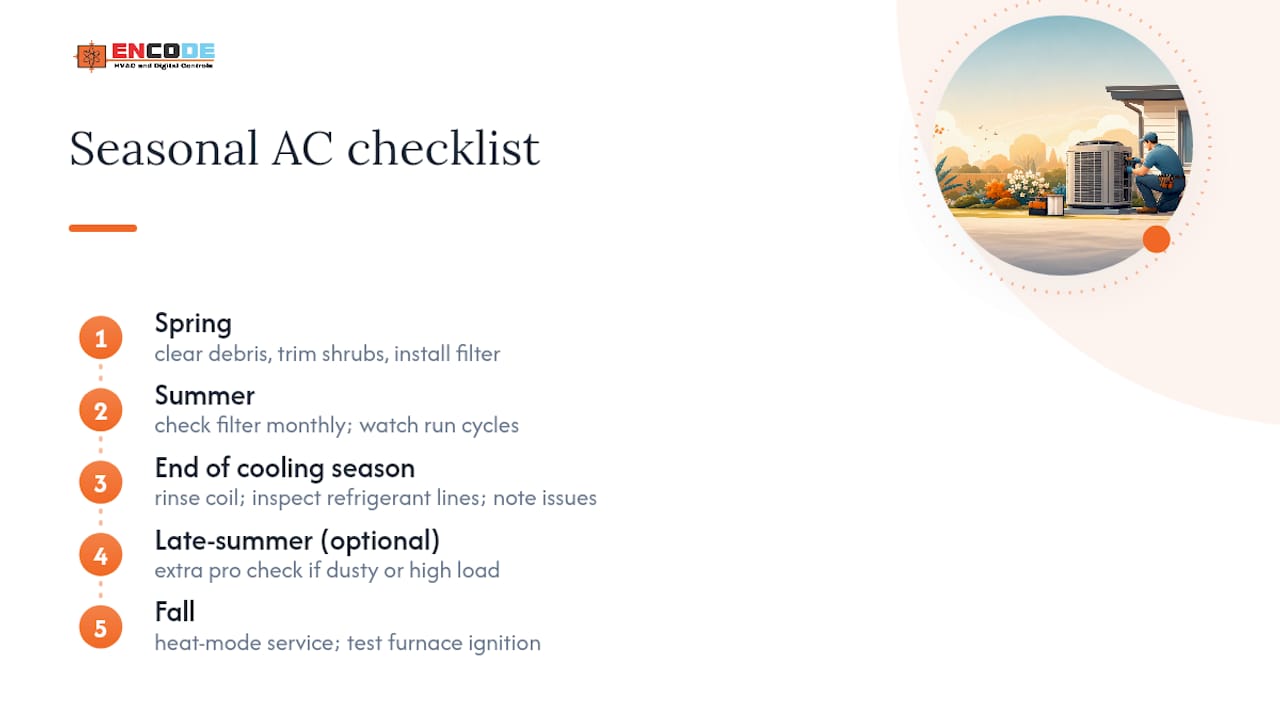
Spring is when the real work happens. Clear leaves, mulch, and grass clippings away from the outdoor condenser, trim back any shrubs crowding it, and put in a fresh filter before you flip the system on for the first real test run. This is also the window to schedule your annual professional tune-up, ideally in March or early April before the peak-season booking rush.
Summer maintenance is mostly watching, not doing. Check the filter monthly instead of quarterly since the system runs constantly. Pay attention to run cycles. A unit that used to cool the house in 20 minutes but now takes 40 is telling you something. Uneven cooling between rooms or moisture pooling near the indoor unit both deserve a closer look.
End of cooling season, usually September, is worth 15 minutes. Rinse debris off the outdoor coil with a garden hose, inspect exposed refrigerant lines for cracked insulation or corrosion, and jot down anything unusual so it's on the technician's radar come spring, not forgotten by winter.
If you're in a dustier or high-load climate, a second professional check near the end of summer can make sense, though most homes get by fine on one spring visit a year.
Fall is for the heating side. Heat pump owners need a heat-mode service check, and if you've got a separate furnace, that's the time to test ignition and airflow before the first cold snap.
What's Included in an Annual Professional AC Tune-Up?
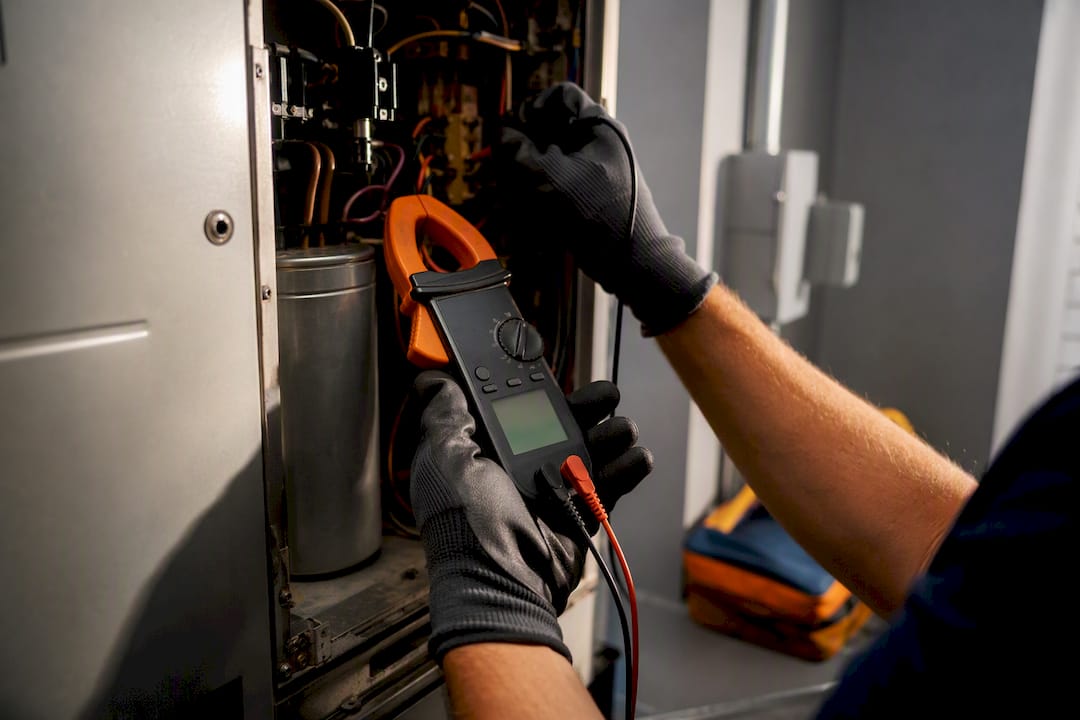
A proper tune-up covers ground a homeowner can't safely reach. A technician's standard visit includes cleaning the condenser and evaporator coils, checking refrigerant charge against manufacturer specs, tightening electrical connections, and measuring voltage and amp draw on the compressor and fan motor. They'll lubricate moving parts, flush the condensate drain line, and test thermostat calibration and control response.
Expect the visit to run 1 to 2 hours for a straightforward system. Cost typically falls between $100 and $350, depending on your region, the system's age, and whether the technician finds something that needs more than a routine check. An older unit that's been skipped for a few years almost always costs more to service than one that's been on a consistent schedule.
Before the technician leaves, ask for two things:
- A written checklist or report showing exactly what was inspected and what the readings were.
- The company's parts pricing policy, so you're not surprised if a capacitor or contactor needs replacing.
Which AC Tasks Are Safe for DIY, and When Should You Call a Pro?
Filters, clearing debris, checking vents, and testing thermostat batteries are all fair game for a homeowner with a screwdriver and a Saturday afternoon. Refrigerant handling, electrical panel work, compressor diagnostics, and anything inside the sealed refrigerant system belong to a licensed technician, full stop. Cracking that seal yourself can void your warranty and, in most states, runs into EPA refrigerant handling rules.
Watch for these red flags and call for service the same week, not the same season:
- Visible ice on the evaporator coil or refrigerant lines.
- A strong chemical or burning odor coming from the vents.
- Water pooling near the indoor unit that won't stop after you clear the drain.
- A breaker that trips more than once when the AC starts.
Pro Tip: If the breaker trips twice, stop resetting it. A third attempt risks damaging the compressor, and that's a repair bill nobody wants.
Printable Checklist: Save This for Your Records
Keep a running note of service dates. It turns "when did we last do this?" into a five second answer.
| Task | Cadence | Who Does It |
|---|---|---|
| Inspect/replace filter | Monthly | DIY |
| Clear debris around outdoor unit | Monthly, spring | DIY |
| Check thermostat batteries | Monthly | DIY |
| Professional tune-up | Annually, spring | Pro |
| Clean condenser coil | Annually, end of season | DIY or Pro |
| Refrigerant charge check | Annually | Pro |
| Condensate drain flush | Annually | Pro |
| Heat-mode/furnace check | Fall | Pro |
Log the date next to each row and note when the next visit is due. It's the single easiest habit that keeps a system from surprising you.
Why 40 Years of Local HVAC Experience Changes the Maintenance Math
This company has spent more than 40 years working on systems across Billings and the surrounding area, and that history shapes how a maintenance plan gets built. Documented inspections mean every visit gets logged, so a technician showing up next spring already knows this unit's history instead of starting cold.
Homeowners on a maintenance plan typically see three practical benefits:
- Priority booking during the peak spring and summer rush, when unplanned service calls can mean a week's wait.
- A written inspection record after every visit, not a verbal "looks fine."
- More predictable annual costs instead of one large surprise repair bill.
Encode's residential maintenance plans outline exactly what's covered, and the same documented checklist approach applies to Encode's commercial maintenance agreements for larger systems.
A Technician's Honest Take on Why Homeowners Skip Maintenance
Most skipped maintenance isn't laziness, it's a filter nobody thought to check until the system started struggling. The fix is rarely complicated: a five minute monthly habit and one spring appointment prevent most of the emergency calls this industry sees every July. Simple, consistent action beats a perfect plan nobody follows.
— Daniel
Book Your Spring Tune-Up Before the Rush
This provider offers homeowners a documented history of their system paired with priority scheduling before the summer rush hits. Instead of hunting for an available technician during the first heat wave, plan members get booked ahead of the walk-in queue, with a written inspection report after every visit and predictable annual costs instead of one big surprise bill.

If your ductwork or attic insulation is part of what's driving uneven cooling, a properly ventilated attic can take real strain off the system too. But the fastest way to stop guessing about your AC's condition is to get it on a schedule. Check out Encode's residential maintenance plans or head straight to AC repair and installation booking to get a spring tune-up on the calendar before the season fills up.
Sources
- Maintenance Checklist
- Air Conditioner Maintenance
- AC maintenance guide: 5 essential tips & service costs
FAQ
How Often Should an AC System Be Serviced?
Most homes need one professional tune-up a year, scheduled in spring before cooling season starts, alongside monthly DIY filter checks throughout the summer.
What Is the $5,000 Rule for AC?
It's a rough repair-versus-replace guideline: multiply the system's age by the repair cost, and if that number tops $5,000, replacement usually makes more financial sense than another repair.
How Do I Know if My AC Needs Service?
Watch for longer run cycles, uneven cooling between rooms, water pooling near the indoor unit, unusual noises, or a breaker that trips when the system starts. Any of those warrants a call sooner than your next scheduled visit.
How Often Should I Service My Air Conditioner Myself?
Check the filter every one to three months, inspect vents and thermostat batteries monthly, and clear debris around the outdoor unit each spring and at season's end. Leave refrigerant, electrical, and compressor work to a licensed technician like those at Encode HVAC and Digital Controls.