
If your AC fan isn't spinning, shut the system off at the thermostat before doing anything else, then check three things: the thermostat mode, the breaker or outdoor disconnect, and whether debris or ice is blocking the fan blade. Most cases trace back to one of those or a failed capacitor. If you smell burning or hear repeated breaker trips, skip the troubleshooting and call a licensed technician.
TL;DR:
- Most fan failures stem from simple causes like a tripped breaker, clogged filter, debris, or ice blocking the fan blade, which can often be checked safely by homeowners.
- Signs of electrical faults include humming without fan spin indicating a capacitor issue, clicking sounds suggesting contactor failure, or total silence pointing to motor failure or seized bearings.
- Safety guidelines emphasize turning off power completely before testing electrical components, with detailed DIY checks limited to mechanical and visual inspections.
- Urgent issues such as burning smells, visible refrigerant leaks, or scorched wiring require immediate professional intervention to prevent system damage or hazards.
- Regular maintenance, including filter replacement and condenser clearance, can prevent most fan-related failures and extend the lifespan of the system.
Table of Contents
- Quick, Safe Checks Before You Touch Anything
- What Your Symptoms Are Telling You
- Safe DIY Tests vs. What Needs a Pro
- When to Call a Licensed HVAC Technician
- What We See Go Wrong in the Field
- Get Your AC Fan Diagnosed and Fixed Right the First Time
- Where to Verify This Information
- Sources
Quick, Safe Checks Before You Touch Anything
Run through these in order. Each one takes a minute or two, and together they catch the majority of simple fixes without opening a single panel.
- Confirm the thermostat is set to Cool, not Fan Only, and that the set temperature is at least 3 degrees below room temperature.
- Flip the indoor fan to "On" briefly to hear if the blower runs. If it does, the problem is likely isolated to the outdoor unit.
- Check the breaker panel and the outdoor disconnect box (the gray metal box near the condenser). Reset a tripped breaker once. If it trips again immediately, stop and call a pro.
- Walk out to the condenser and look. Check for leaves, grass clippings, a bent fan blade, visible ice on the coil, or dark oil residue near the top of the unit.
- Pull the air filter. If it's gray and clogged, swap it. A blocked filter starves airflow and can freeze the coil, which shuts the whole system down as a protective measure.
Pro Tip: If you just replaced the filter and the system was frozen, don't restart the AC right away. Let it thaw for a few hours first, or you risk pushing liquid refrigerant back into the compressor.
What Your Symptoms Are Telling You
The way the fan fails is usually a bigger clue than whether it's spinning at all. Match what you're hearing (or not hearing) to the list below.
- Humming but no movement: almost always a failed start or run capacitor. Look for a bulging top or oily residue on the capacitor's casing, both signs it's leaking and near the end of its life.
- Clicking sound, compressor running, fan dead silent: points to a failed contactor, the relay that sends power to the fan motor. The compressor can keep humming along while the fan gets nothing.
- Total silence, blade won't turn by hand (power off): motor bearing failure or a seized shaft. A seized bearing typically won't budge, or will wobble noticeably when you try to spin it manually.
- Grinding or scraping noise: worn bearings, sometimes with metal shavings visible around the motor housing.
- Blade spins freely by hand but won't start on power: this usually means the start capacitor or the start circuit is the problem, not the motor windings themselves.
- Physical resistance: a stick, a dead leaf, or a missing set screw on the fan hub can jam the blade entirely. Cheap fix if that's all it is.
- Ice on the indoor coil, warm air at the vents, outdoor unit hot to the touch: a clogged filter choked airflow, froze the evaporator coil, and now the outdoor fan may be tripping on overload protection.
One diagnostic detail worth knowing: a methodical check of the thermostat, breaker, and filter resolves a large share of no-cool service calls before any tools come out, according to field data from HVAC diagnostic guides. That's the whole reason the checklist above comes first. It's also worth noting that some issues that look like a dead capacitor are actually a failed contactor or a wiring fault at the control board, which is why guessing and swapping parts one at a time wastes money.
Safe DIY Tests vs. What Needs a Pro
Here's where you draw the line between "I can check this myself" and "this needs a licensed technician with a meter."
- Power down completely. Flip the breaker and the outdoor disconnect. Wait at least 5 minutes. Capacitors hold a charge even with the power off, and that stored charge can deliver a dangerous or lethal shock to anyone who touches the terminals without training.
- Do the manual spin test. With power confirmed off, gently try to turn the fan blade by hand. If it spins freely with no resistance, the motor bearings are probably fine and the fault is electrical. If it resists, wobbles, or won't turn, suspect a seized bearing.
- Listen for humming when the system first tries to start (from a safe distance, before you kill power for testing). Humming with no spin usually means capacitor. Total silence with a stuck blade points to the motor itself.
- Handle the mechanical stuff yourself if it's simple: clear leaves and debris, tighten a loose set screw on the fan hub, replace the filter, trim vegetation back 2 feet from the condenser.
- Stop there. Testing capacitance, checking voltage at the disconnect, or verifying contactor continuity all require a multimeter and the training to use it safely. These aren't jobs for a screwdriver and a hunch.
Pro Tip: Never push the fan blade with a stick or screwdriver to "kick-start" it while the unit is powered. It might spin briefly, but it does nothing to fix the underlying electrical fault and it's a fast way to lose a finger.
When to Call a Licensed HVAC Technician
Some signs mean stop troubleshooting and pick up the phone immediately:
- Burning smell coming from the outdoor unit or indoor air handler
- The breaker trips a second time after you reset it
- Visible refrigerant leak (oily residue on copper lines, hissing sound)
- Exposed or scorched wiring anywhere near the unit
- A capacitor that's visibly bulging, split, or leaking fluid
A technician will test voltage at the disconnect, check capacitance against the rated microfarad value, verify contactor continuity, and read motor winding resistance before replacing anything. That last part matters. A multimeter check confirms the actual fault instead of guessing and swapping parts on a hunch.
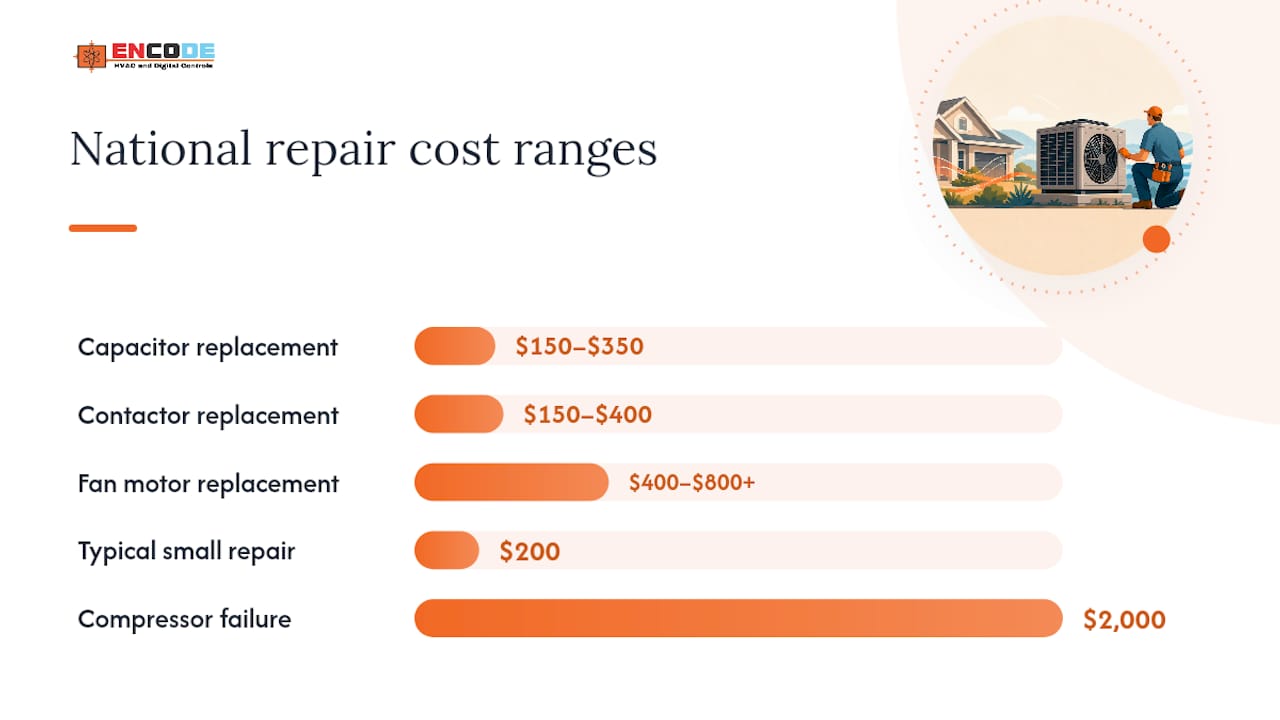
Expect rough national ranges of $150 to $350 for a capacitor replacement, $150 to $400 for a contactor, and $400 to $800 or more for a full fan motor replacement, depending on your market and unit size. Never run the compressor with a dead outdoor fan. Without airflow across the condenser coil, heat has nowhere to go, and the compressor can overheat and fail within minutes, turning a $200 repair into a $2,000 one.
What We See Go Wrong in the Field
The riskiest calls aren't the ones where the fan is dead. They're the ones where someone tried to fix it first. We've walked into service calls where a homeowner jammed a stick into a spinning fan housing to "help it along," and ended up with a bent blade and a bigger repair bill than if they'd just called in the first place.
The maintenance side is unglamorous but it works. Swap the filter every 1 to 3 months, keep 2 feet of clearance around the condenser, and get an annual tune-up before peak season. Filter changes and a clear condenser area genuinely extend the life of the fan motor and capacitor, and they cost you almost nothing compared to a mid-July motor replacement.
— Daniel
Get Your AC Fan Diagnosed and Fixed Right the First Time
A no-spin fan usually means one of two things: a fifteen-minute fix, or a part that needs a trained hand and the right meter. Licensed technicians run the electrical checks safely, quote the repair before touching anything, and get your system back on the same visit whenever possible.

Whether it's a worn capacitor, a bad contactor, or a motor on its way out, our residential AC repair team in Billings and the surrounding area handles the diagnosis and the fix in one trip. If this is the second time this fan has failed, ask about our HVAC maintenance plans, which catch worn capacitors and dirty condensers before they leave you without cooling on the hottest day of the year. For homeowners looking to plan ahead rather than react, scheduling tune-ups before shoulder season backlogs hit is one of the simplest ways to avoid an emergency call altogether. Call or book online, and get a technician who can tell you the real cause before you spend a dime.
Where to Verify This Information
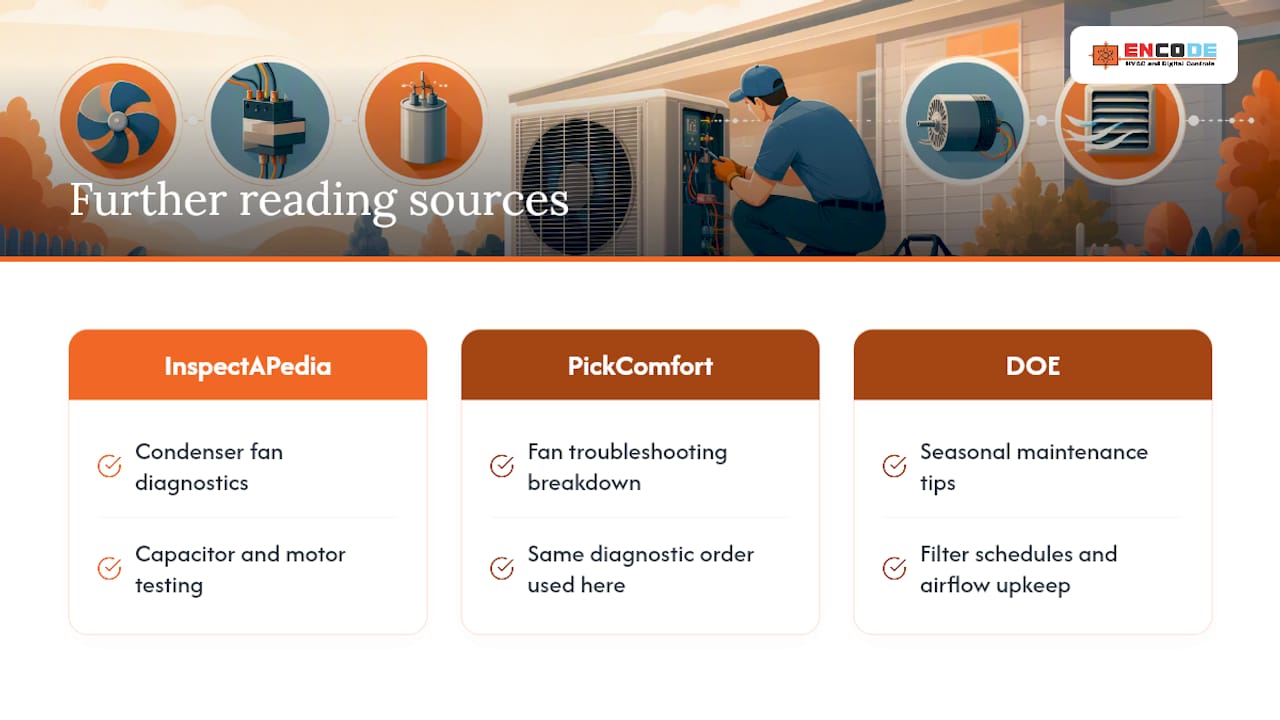
For deeper technical background, InspectAPedia's condenser fan diagnostic guide covers capacitor and motor testing in detail. PickComfort's fan troubleshooting breakdown walks through the same diagnostic order used here. The Department of Energy's seasonal maintenance tips cover filter schedules and airflow upkeep.
Sources
- Diagnose & Repair AC Condenser Unit Fan - InspectAPedia
- AC on but fan not running: Causes, diagnosis, and fixes - PickComfort